


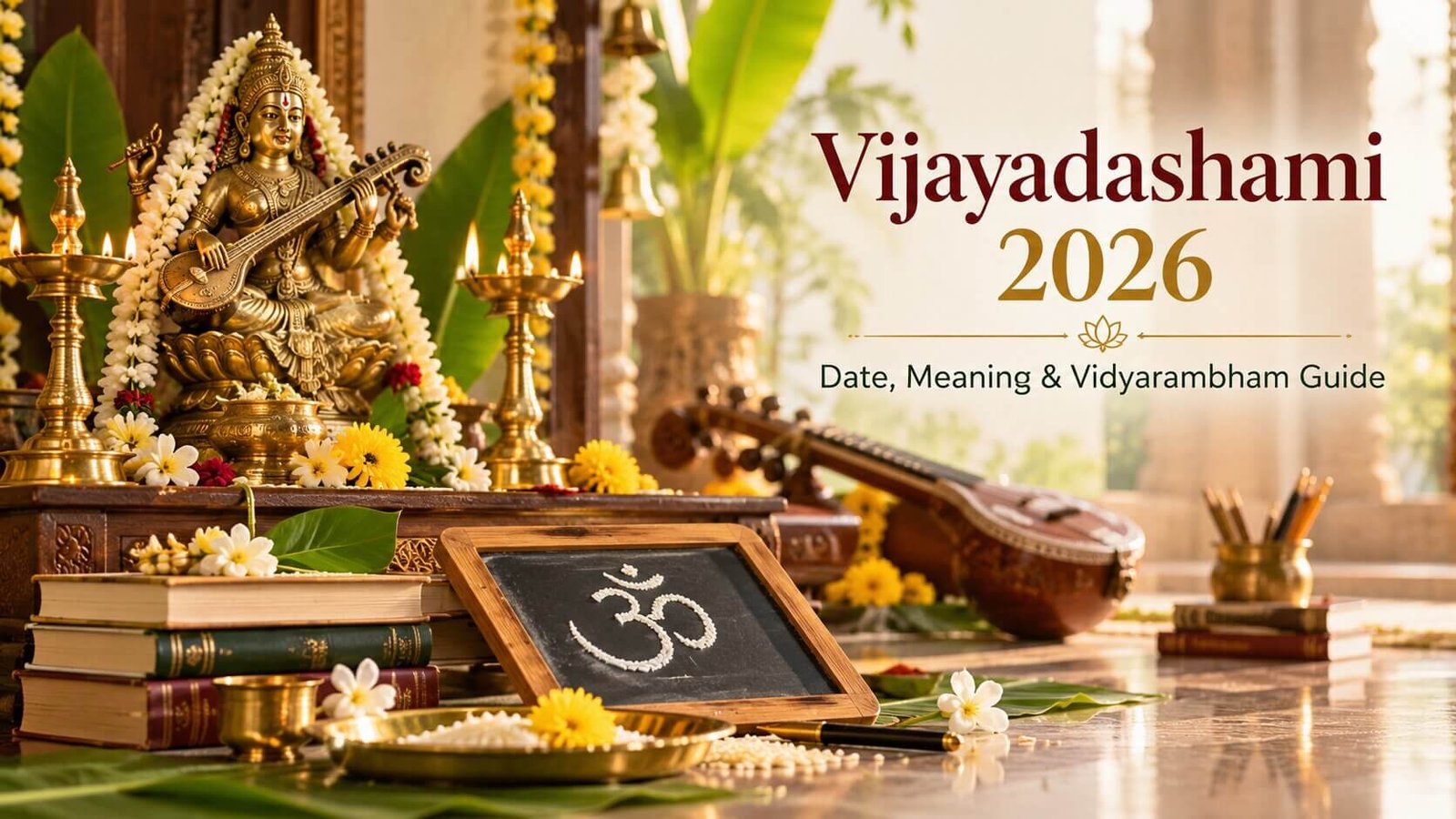
Quick glance: In 2026, Vijayadashami falls on Tuesday 20 October in most calendars, including Tamil calendars. Kerala’s official calendar places Vijayadashami, Pooja Eduppu and Vidyarambham on Wednesday 21 October. This is a genuine difference in regional calendar practice, and it is explained below.
Vijayadashami marks victory, renewal and an auspicious return to learning and work. This guide covers the two dates, the Kerala sequence of Pooja Veypu, Pooja Eduppu and Vidyarambham, and a simple way to observe the day at home.
Vijayadashami 2026 date: 20 or 21 October?
A calendar date and a tithi are not the same thing. Dashami, the tenth lunar day, runs across two civil dates in 2026. In Indian Standard Time, Dashami begins at 12:50 p.m. on 20 October and ends at 2:11 p.m. on 21 October. Different calendars and temples choose the date on which the ritual window falls, so both 20 and 21 October appear in 2026 listings.
Vijayadashami dates by region
- Tamil Nadu and most general calendars: Tuesday 20 October 2026.
- Kerala: Wednesday 21 October 2026, listed as Vijayadasami in the state government holiday list. Pooja Eduppu and Vidyarambham are observed on this day.
- Karnataka: Wednesday 21 October 2026 under the Mysuru panchanga.
Which date should your family follow?
Follow the calendar your family has always used, or the date announced by your temple. For a temple ceremony, a school programme or an organised Vidyarambham, the venue’s announced schedule is the date that matters. If relatives live in different states, state the ritual along with the date, for example “Vidyarambham on 21 October”, instead of simply “Vijayadashami tomorrow”.
Why Vijayadashami is a day for new beginnings
Vijayadashami closes the Navaratri cycle. The idea is that knowledge, courage and disciplined action now return to ordinary life. This is why study, music, dance, languages, crafts and professional training are traditionally begun or resumed on this day.
Vijayadashami, Dussehra and Dasara: are they the same?
They belong to the same festival period, but the stories and customs differ by region.
- North India: Dussehra prominently recalls Rama’s victory over Ravana.
- Devi traditions: The day is also remembered as Durga’s triumph over Mahishasura.
- Mysuru: Dasara has its own royal and public tradition.
- South India and Kerala: Vijayadashami is closely linked with Saraswati worship, Ayudha Pooja and the beginning of learning.
Pooja Veypu, Pooja Eduppu and Vidyarambham in Kerala
From Pooja Veypu to Pooja Eduppu
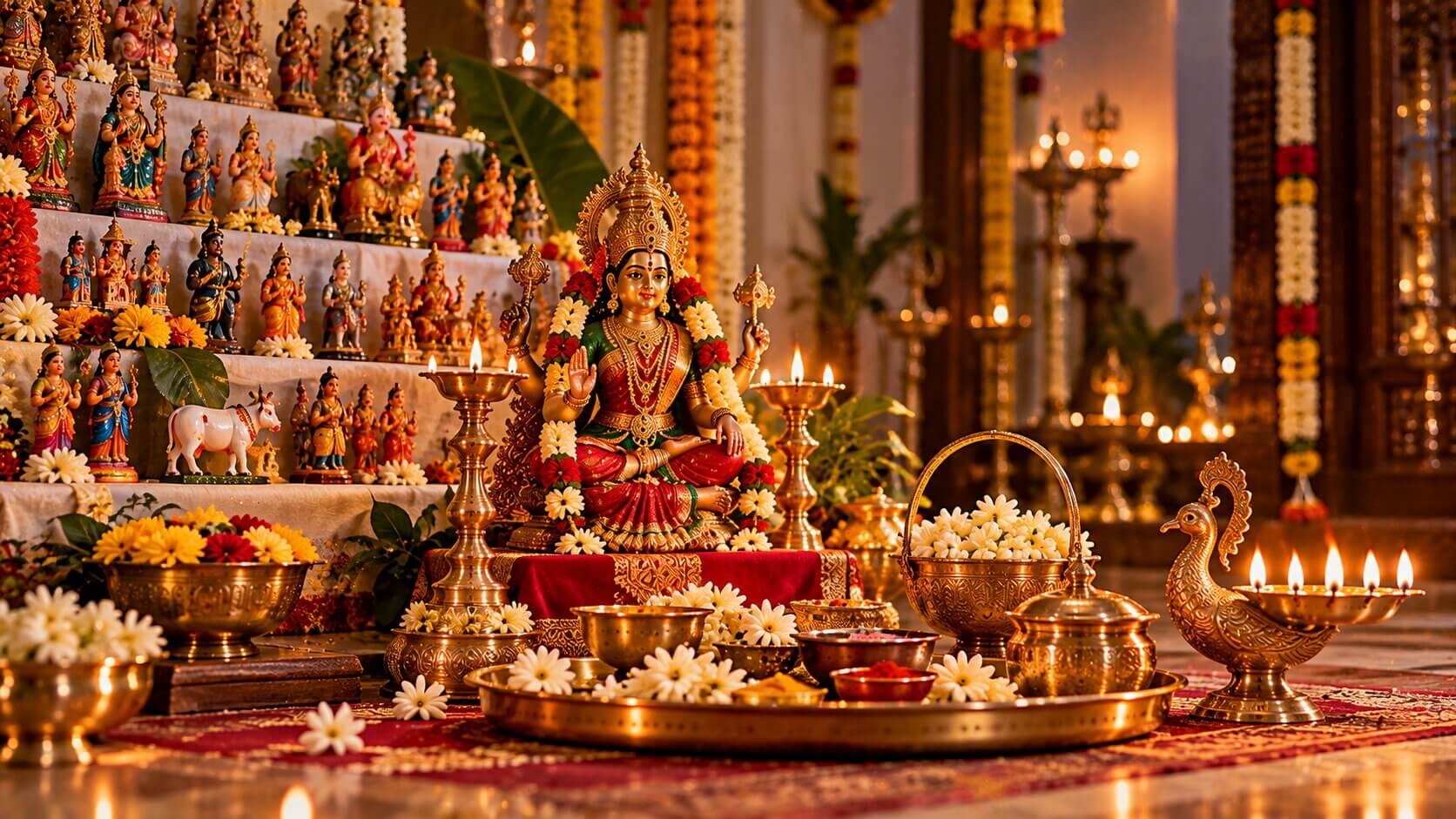
In many Kerala households and temples, books, writing implements and sometimes musical instruments or work tools are cleaned and placed before Saraswati for Pooja Veypu. It is a deliberate pause in ordinary study, a way of honouring learning. In 2026, many Kerala temples place books on 18 October. Ayudha Pooja, which honours tools and instruments, follows on Mahanavami.
On Vijayadashami, Pooja Eduppu is the respectful taking back of these objects after worship. The observance does not end at the altar: a child opens a book, a musician plays a note, a worker returns to a tool with care. The exact days and timings differ by temple and household, so follow your own tradition.
Vidyarambham and Ezhuthiniruthu
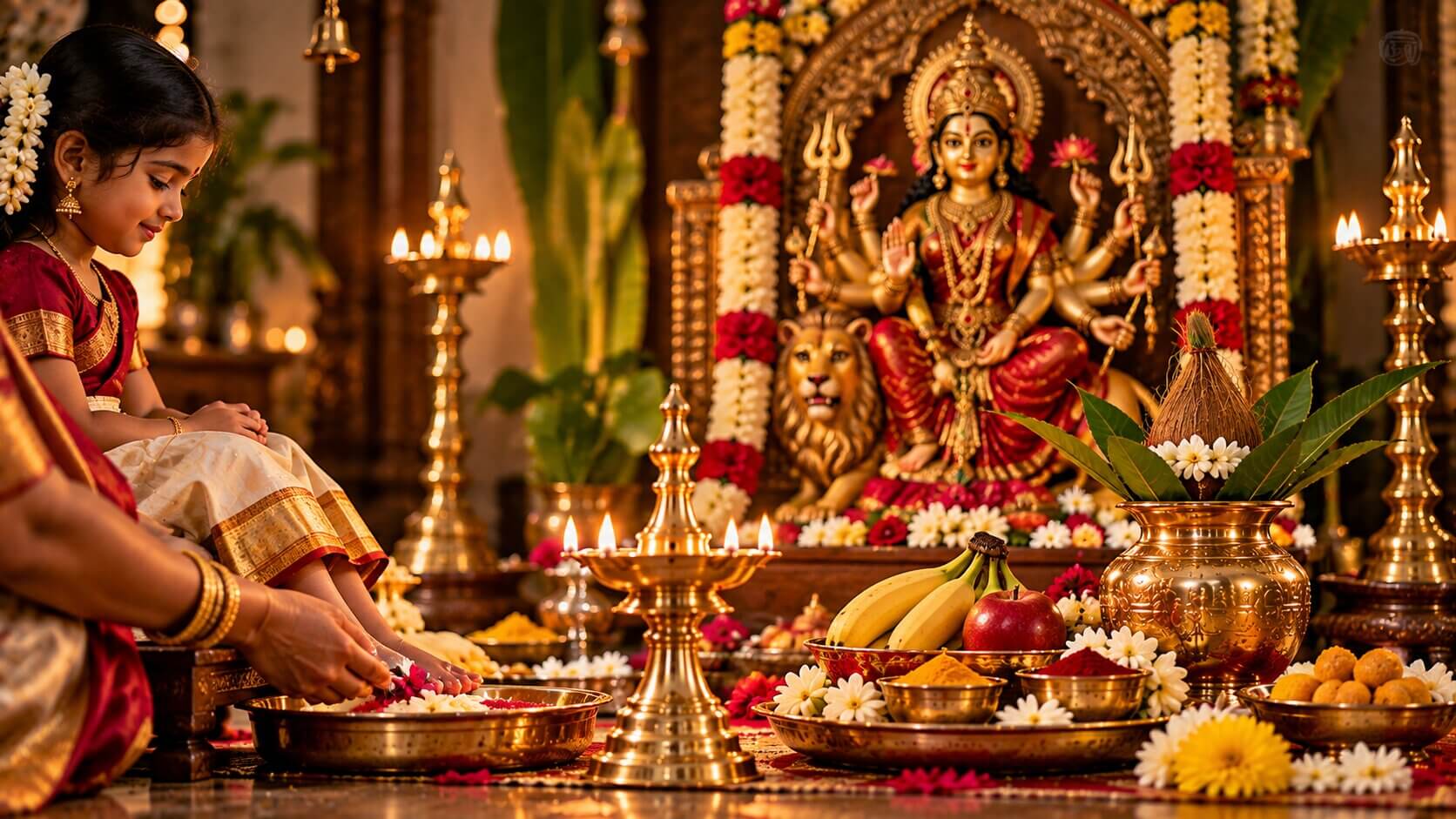
Vidyarambham, also called Ezhuthiniruthu, is the ceremonial beginning of learning. In Kerala, a young child is guided into first letters by a guru, priest, teacher or elder, often at a temple or cultural institution. The elder usually guides the child’s finger through letters on rice. Some traditions begin with an invocation to Ganesha, commonly written as “Hari Sri Ganapathaye Namah”, but the wording, sequence and spelling should come from the officiating teacher or temple, not from an unverified social media graphic.
A child’s formal first writing and an adult’s return to study are related but not identical. Adults and older students can also mark the day with a first page, a first note or a first class.
Preparing for a temple Vidyarambham
Contact the venue before travelling and ask:
- What are the date and reporting time, and is advance registration required?
- Are rice, a tray, flowers or writing materials provided, and is a dakshina expected?
- Is there a dress code, may a parent accompany the child, and is photography allowed?
Dress the child comfortably and carry water, a small snack where permitted, and a change of clothes for very young children. Queues and unfamiliar surroundings can overwhelm a small child. If the child is frightened or unwilling, there is no need to force a long ceremony for the sake of photographs.
A simple rice tray at home
An informal first-letter exercise at home is possible, but it does not replace a formal ceremony if that is what your family intends.
- Use a broad, shallow, clean tray or a brass pooja thali with a thin, level layer of uncooked rice.
- Place it on a stable table within the child’s easy reach.
- Keep the diya and flowers on a separate plate. Never place an open flame beside the child’s hand.
- Guide the finger gently and speak calmly. If the child becomes upset, stop and try again later.
- Keep this rice separate from your ordinary food storage.
How to observe Vijayadashami at home
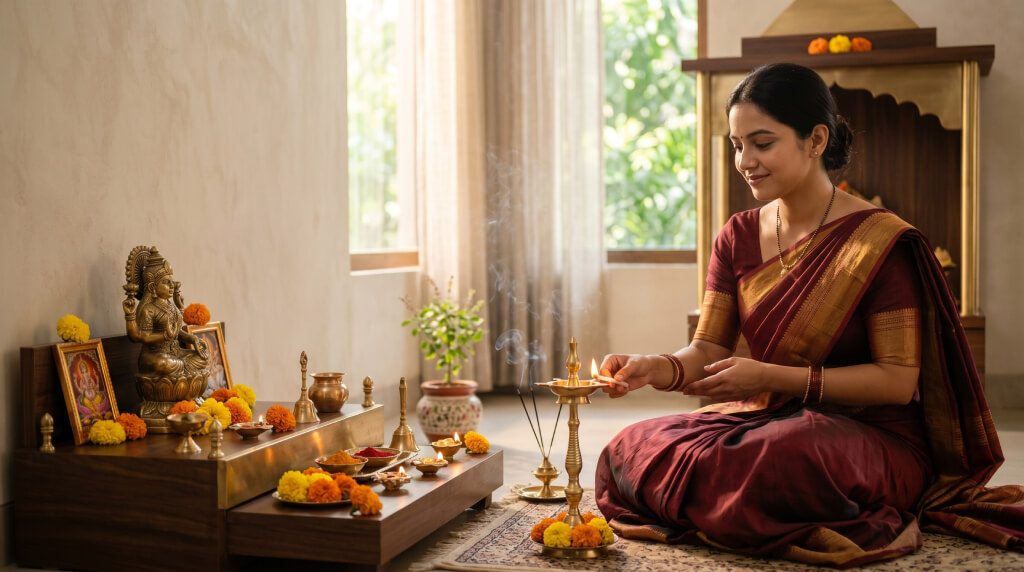
- Light the lamp and offer a short prayer to Saraswati, Devi or your family deity.
- If books or instruments were kept for Saraswati Pooja, take them back respectfully according to your family practice.
- Begin or resume study, music, dance, writing or another skill. Even a short first practice marks the intention.
- If tools were worshipped for Ayudha Pooja, return them to safe, purposeful use.
- Offer a simple naivedyam and complete the prayer with aarti, ideally with everything arranged on one pooja thali.
Prayers to recite on Vijayadashami
These are traditional Sanskrit prayers widely used for Saraswati Pooja, Pooja Eduppu and the beginning of learning. You do not need all of them. Choose one or two, and if your family or temple has its own prayers, use those. Each prayer is given in Malayalam, Tamil and Devanagari script, with a transliteration and its meaning. Pronunciation and wording vary slightly between traditions, so if possible, learn them by listening to an elder or your teacher.
1. Ganesha prayer, to begin without obstacles
Malayalam:
വക്രതുണ്ഡ മഹാകായ സൂര്യകോടി സമപ്രഭ ।
നിർവിഘ്നം കുരു മേ ദേവ സർവകാര്യേഷു സർവദാ ॥
Tamil:
வக்ரதுண்ட மஹாகாய ஸூர்யகோடி ஸமப்ரப ।
நிர்விக்னம் குரு மே தேவ ஸர்வகார்யேஷு ஸர்வதா ॥
Devanagari:
वक्रतुण्ड महाकाय सूर्यकोटि समप्रभ ।
निर्विघ्नं कुरु मे देव सर्वकार्येषु सर्वदा ॥
Transliteration:
Vakratunda mahakaya suryakoti samaprabha
Nirvighnam kuru me deva sarvakaryeshu sarvada
Meaning: O Lord with the curved trunk and mighty form, whose radiance equals a million suns, make all my undertakings free of obstacles, always.
2. Saraswati prayer, for starting study or practice
This is the verse traditionally said before beginning a lesson, and it suits Pooja Eduppu and a first practice session.
Malayalam:
സരസ്വതി നമസ്തുഭ്യം വരദേ കാമരൂപിണി ।
വിദ്യാരംഭം കരിഷ്യാമി സിദ്ധിർഭവതു മേ സദാ ॥
Tamil:
ஸரஸ்வதி நமஸ்துப்யம் வரதே காமரூபிணி ।
வித்யாரம்பம் கரிஷ்யாமி ஸித்திர்பவது மே ஸதா ॥
Devanagari:
सरस्वति नमस्तुभ्यं वरदे कामरूपिणि ।
विद्यारम्भं करिष्यामि सिद्धिर्भवतु मे सदा ॥
Transliteration:
Saraswati namastubhyam varade kamarupini
Vidyarambham karishyami siddhir bhavatu me sada
Meaning: Salutations to you, Saraswati, giver of boons, who takes whatever form you wish. I begin my learning; may I always attain success.
3. Saraswati Vandana, for the lamp and the books
Malayalam:
യാ കുന്ദേന്ദുതുഷാരഹാരധവളാ യാ ശുഭ്രവസ്ത്രാവൃതാ
യാ വീണാവരദണ്ഡമണ്ഡിതകരാ യാ ശ്വേതപദ്മാസനാ ।
യാ ബ്രഹ്മാച്യുതശങ്കരപ്രഭൃതിഭിർദേവൈഃ സദാ പൂജിതാ
സാ മാം പാതു സരസ്വതീ ഭഗവതീ നിഃശേഷജാഡ്യാപഹാ ॥
Tamil:
யா குந்தேந்துதுஷாரஹாரதவளா யா ஶுப்ரவஸ்த்ராவ்ருதா
யா வீணாவரதண்டமண்டிதகரா யா ஶ்வேதபத்மாஸனா ।
யா ப்ரஹ்மாச்யுதஶங்கரப்ரப்ருதிபிர்தேவை: ஸதா பூஜிதா
ஸா மாம் பாது ஸரஸ்வதீ பகவதீ நி:ஶேஷஜாட்யாபஹா ॥
Devanagari:
या कुन्देन्दुतुषारहारधवला या शुभ्रवस्त्रावृता
या वीणावरदण्डमण्डितकरा या श्वेतपद्मासना ।
या ब्रह्माच्युतशङ्करप्रभृतिभिर्देवैः सदा पूजिता
सा मां पातु सरस्वती भगवती निःशेषजाड्यापहा ॥
Transliteration:
Ya kundendu-tushara-hara-dhavala ya shubhra-vastravrita
Ya veena-vara-danda-manditakara ya shveta-padmasana
Ya brahmachyuta-shankara-prabhritibhir devaih sada pujita
Sa mam patu sarasvati bhagavati nihshesha-jadyapaha
Meaning: May Goddess Saraswati protect me. She is white as jasmine, the moon and a garland of snow, dressed in pure white, with hands adorned by the veena, seated on a white lotus, and ever worshipped by Brahma, Vishnu, Shiva and the gods. May she remove all dullness and ignorance.
4. Guru prayer, before a teacher or elder guides the first letters
Malayalam:
ഗുരുർബ്രഹ്മാ ഗുരുർവിഷ്ണുഃ ഗുരുർദേവോ മഹേശ്വരഃ ।
ഗുരുഃ സാക്ഷാത് പരം ബ്രഹ്മ തസ്മൈ ശ്രീഗുരവേ നമഃ ॥
Tamil:
குருர்ப்ரஹ்மா குருர்விஷ்ணு: குருர்தேவோ மஹேஶ்வர: ।
குரு: ஸாக்ஷாத் பரம் ப்ரஹ்ம தஸ்மை ஶ்ரீகுரவே நம: ॥
Devanagari:
गुरुर्ब्रह्मा गुरुर्विष्णुः गुरुर्देवो महेश्वरः ।
गुरुः साक्षात् परं ब्रह्म तस्मै श्रीगुरवे नमः ॥
Transliteration:
Gurur Brahma gurur Vishnur gurur devo Maheshwarah
Gurur sakshat param Brahma tasmai shri gurave namah
Meaning: The guru is Brahma, the guru is Vishnu, the guru is Maheshwara. The guru is the supreme reality itself. Salutations to that revered guru.
5. Devi prayer, for Vijayadashami as the day of Durga’s victory
Malayalam:
സർവമംഗലമാംഗല്യേ ശിവേ സർവാർഥസാധികേ ।
ശരണ്യേ ത്ര്യംബകേ ഗൗരി നാരായണി നമോസ്തു തേ ॥
Tamil:
ஸர்வமங்களமாங்கல்யே ஶிவே ஸர்வார்த்தஸாதிகே ।
ஶரண்யே த்ர்யம்பகே கௌரி நாராயணி நமோஸ்து தே ॥
Devanagari:
सर्वमङ्गलमाङ्गल्ये शिवे सर्वार्थसाधिके ।
शरण्ये त्र्यम्बके गौरि नारायणि नमोऽस्तु ते ॥
Transliteration:
Sarva-mangala-mangalye shive sarvartha-sadhike
Sharanye tryambake gauri narayani namostute
Meaning: O auspicious one, who brings auspiciousness to all that is auspicious, consort of Shiva, fulfiller of every purpose, giver of refuge, three-eyed Gauri, Narayani, I bow to you.
A simple mantra for daily practice
Malayalam:
ഓം ഐം സരസ്വത്യൈ നമഃ
Tamil:
ஓம் ஐம் ஸரஸ்வத்யை நம:
Devanagari:
ॐ ऐं सरस्वत्यै नमः
Transliteration:
Om Aim Saraswatyai Namah
Meaning: Salutations to Saraswati. Many families chant this a few times before study or music practice, with a short moment of silence afterwards. The seed syllable “Aim” is traditionally associated with Saraswati and learning.
Om Hari Sri Ganapathaye Namah: the Vidyarambham invocation
This is the invocation traditionally written first when a child begins to write. In Kerala, the first word a child learns to write is often Harisree (ഹരിശ്രീ), taken from the opening of this prayer. The full form commonly written in Malayalam is Om Hari Sri Ganapathaye Namah, Avighnamastu, Sri Gurubhyo Namah: a salutation to Ganapati, a wish for a beginning without obstacles, and a salutation to the teachers.
Malayalam:
ഓം ഹരിഃ ശ്രീ ഗണപതയേ നമഃ ।
അവിഘ്നമസ്തു ।
ശ്രീ ഗുരുഭ്യോ നമഃ ॥
Tamil:
ஓம் ஹரி: ஸ்ரீ கணபதயே நம: ।
அவிக்னமஸ்து ।
ஸ்ரீ குருப்யோ நம: ॥
Devanagari:
ॐ हरिः श्री गणपतये नमः ।
अविघ्नमस्तु ।
श्री गुरुभ्यो नमः ॥
Transliteration:
Om Hari Sri Ganapathaye Namah
Avighnamastu
Sri Gurubhyo Namah
Meaning, word by word:
- Om: the sacred syllable that begins the prayer.
- Hari: a name of Vishnu; here also understood as the one who removes ignorance.
- Sri: auspiciousness and prosperity, the grace of Lakshmi.
- Ganapathaye Namah: salutations to Ganapati, the remover of obstacles.
- Avighnamastu: may there be no obstacles.
- Sri Gurubhyo Namah: salutations to the revered teachers who impart knowledge.
One traditional explanation, shared by Kerala temple communities, reads the opening syllables as standing for the 51 letters of the alphabet, which are sacred to Saraswati. In this reading, the child bows to Hari to remove ignorance, to Sri for the means to gain learning, and to Ganapati to clear the path, before writing the letters. Treat this as a devotional interpretation rather than a fixed rule.
How it is used: The teacher or elder usually speaks the words while guiding the child’s finger to write them on rice, and then guides the first letters of the alphabet. Some traditions also have the elder write the invocation on the child’s tongue. Many families use the shorter form without “Sri Gurubhyo Namah”, and some add further verses, so follow the officiating teacher or temple.
What to begin on Vijayadashami
- A child’s first letters or reading practice
- Music, dance or language lessons
- A new book or structured course
- A craft, professional skill or disciplined study routine
- An instrument or practice that was paused for Saraswati Pooja
Make the first lesson continue
The first lesson matters more when a second follows. Choose one small action you can repeat: ten minutes of reading aloud, a few letters on paper later in the week, five minutes of music, or a simple drawing exercise. A child who is not yet ready to write may enjoy a story or naming letters instead. A student might clean the desk and set a realistic study plan, and a musician might tune an instrument and practise one composition. Write down your next practice date so the symbolic start becomes a habit. These are practical modern ways to observe the day, not religious rules.
A simple pooja setup
One brass pooja thali can hold the whole offering: small containers of kumkum and sandal paste, flowers in one section, and the naivedyam, with the aarti carried on the same thali afterwards. Light a stable lamp, such as a brass peacock lamp, at a safe distance from the books and out of a child’s reach, and keep the ghee for the lamp in a covered brass ghee pot beside the altar so it is ready when you need it. With everything in one place, the pooja flows calmly from the first lamp to the final aarti. The meaningful act is the deliberate return to learning and disciplined practice.
Common mistakes to avoid
- Treating one date as the only correct date for every community in 2026.
- Assuming a formal Vidyarambham must be performed by a parent when your family tradition calls for a guru or temple officiant.
- Placing heavy tools, sharp objects or electrical appliances near children for a photograph.
- Expecting the ritual alone to bring results, when the day marks a beginning that grows through steady practice.
- Turning a child’s first lesson into a stressful performance for cameras.
Frequently asked questions
1. When is Vijayadashami in 2026?
Most calendars, including Tamil calendars, place it on Tuesday 20 October 2026. Kerala’s official calendar places Vijayadashami, Pooja Eduppu and Vidyarambham on Wednesday 21 October 2026. Karnataka observes it on 21 October under the Mysuru panchanga. For a temple ceremony, follow the temple’s announced date.
2. Is Vidyarambham only for small children?
The formal first-letter ceremony is especially associated with children, but Vijayadashami is also widely used by older students and adults to begin or resume learning.
3. What should I write during Vidyarambham?
Use the letters and wording taught by the officiating teacher or followed in your family. Kerala institutions often have a traditional initiation formula, but not every ceremony uses identical wording.
Which books and instruments can I place for the pooja?
The ones you already study and work with: school books, notebooks, music books, instruments and everyday tools. Placing them before Saraswati and taking them back on Pooja Eduppu honours the learning and work that fill your year.
4. Is Vijayadashami the same as Ayudha Pooja?
They are closely linked, yet distinct. Ayudha Pooja honours tools and instruments, while Vijayadashami marks their return to use and the start of new beginnings.
5. Can I start a business on Vijayadashami?
Many families consider the day auspicious for beginnings, but business decisions should still rest on practical and financial judgment.
6. Can I start music or another skill on Vijayadashami?
Yes. Starting or resuming music, writing, reading or another discipline is a widely followed way to mark the day.
7. Which pooja thali is suitable for Vijayadashami?
A handcrafted brass pooja thali is a traditional, lasting choice. It holds the diya, flowers, kumkum, sandal paste and naivedyam together, is easy to clean, and can be brought out again for every festival of the year. Choose one with a steady base, especially if children will be near the altar.
Related reading
- Navaratri 2026: nine days and worship traditions
- Saraswati Pooja and Ayudha Pooja 2026
- Durga Ashtami 2026
Anugrahāt Sarvam. Anugrah Aura offers handcrafted brass pooja essentials, delivered across India, for your home altar.
Sources and date verification
- Government of Kerala, public holidays 2026 (Mahanavami on Tuesday 20 October, Vijayadasami on Wednesday 21 October), as reported by Onmanorama: Kerala public holidays 2026
- Drik Panchang, Vijayadashami 2026: Vijayadashami date and puja time
- Drik Panchang, Ashwina festivals 2026: Festival calendar for Ashwina