


Durga Ashtami 2026: Quick Facts
Durga Ashtami (Maha Ashtami) falls on Monday, 19 October 2026 in India, by the sunrise-tithi rule. Some calendars and regions list Sunday, 18 October, so check your local Panchang before fixing your pooja, fast or Kanya Puja.
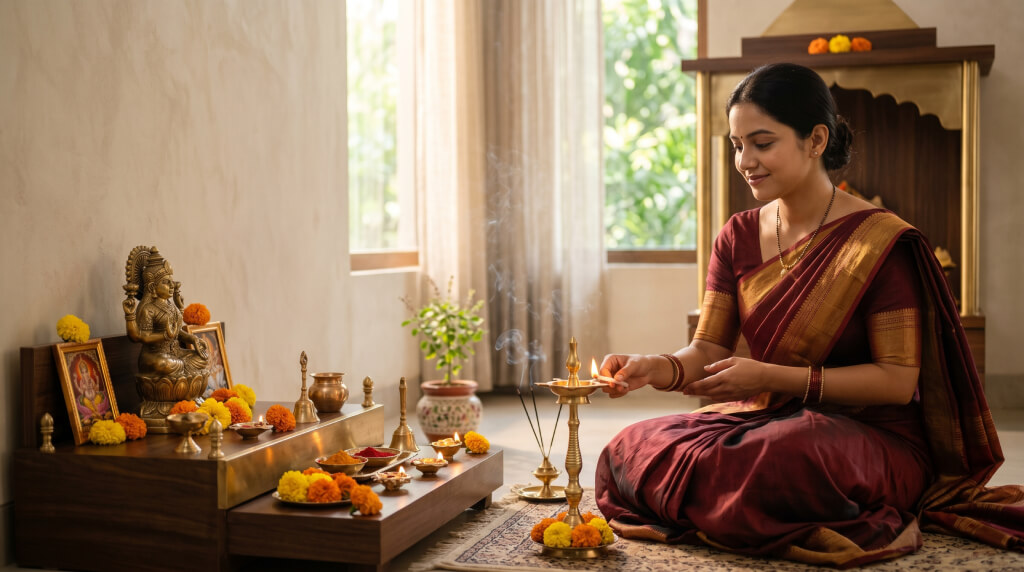
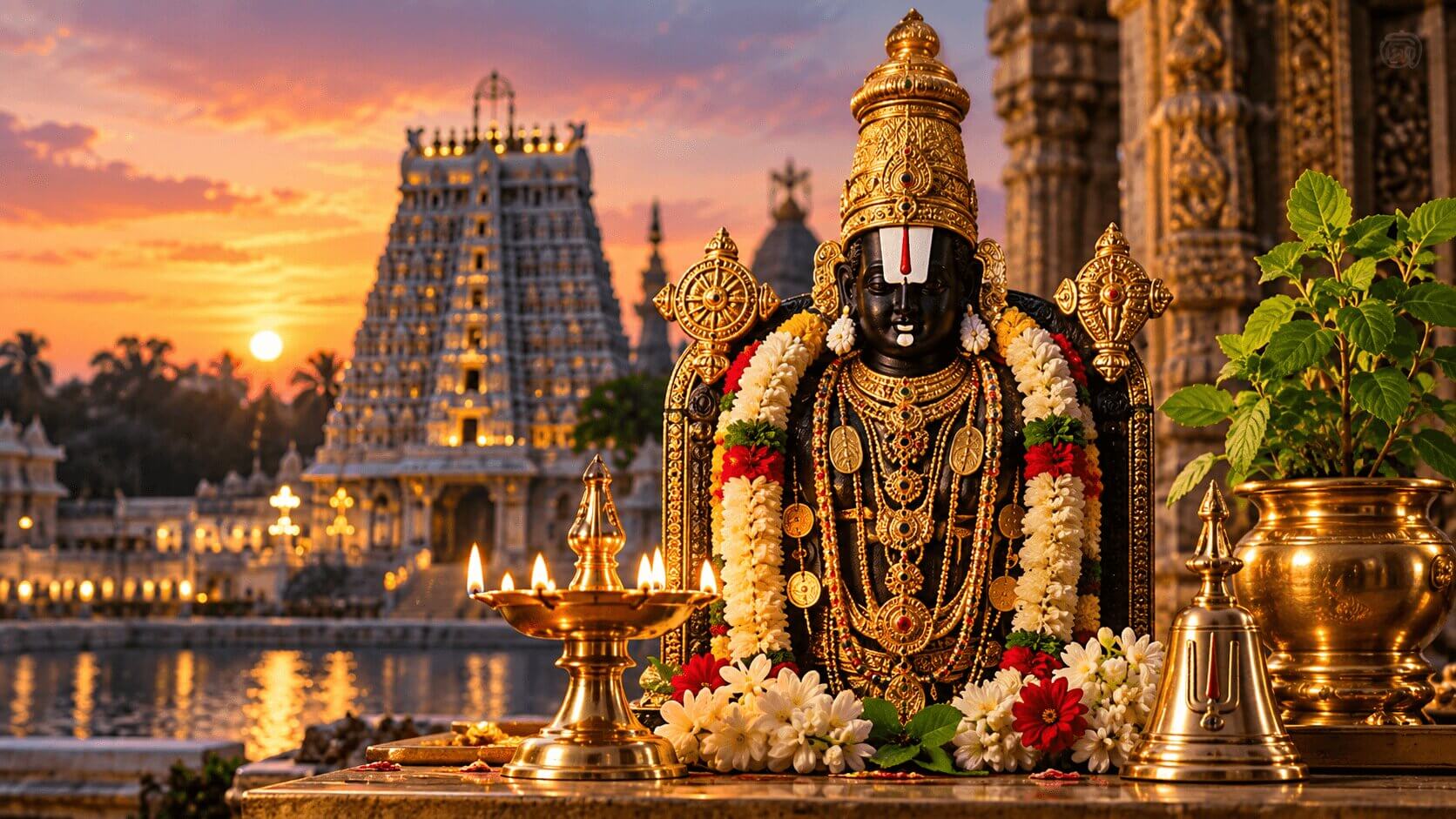
Durga Ashtami is one of the most important days of Sharad Navaratri. In the Navadurga sequence it is associated with Mahagauri, while Bengali Durga Puja gives Maha Ashtami its own elaborate liturgy, including Kumari Puja and Sandhi Puja. At home the observance can be very simple: a steady lamp, flowers, a Devi prayer, naivedyam and aarti, with Kanya Puja where it is part of your family tradition.
Durga Ashtami 2026 date: 18 or 19 October?
In 2026 the end of Navaratri has an unusual tithi pattern. Saptami prevails at two consecutive sunrises, so Ashtami begins during the day on 18 October, after sunrise, and ends on the morning of 19 October. Navami follows on the same morning. Because the sunrise-tithi rule counts the day on which Ashtami is present at sunrise, most Indian Panchangs place Durga Ashtami on Monday, 19 October 2026. Popular nine-day colour charts, which simply count days from the first night, call 18 October “Day 8”.
Calendars outside India often differ. Drik Panchang lists Ashtami on Sunday, 18 October for the USA, Canada and the UK, with Maha Navami on 19 October, and some sites call the choice genuinely ambiguous. Neither reading is an error: they apply the same rule to different sunrises.
| Detail | 2026 (India-based Panchangs) |
|---|---|
| Ashtami tithi | Begins during 18 October; ends on the morning of 19 October (about 10:53 AM in New Delhi) |
| Sandhi Puja window, New Delhi | Roughly 10:29 AM to 11:17 AM on 19 October |
| Sandhi junction, Hyderabad | About 10:51 AM IST on 19 October |
| Maha Navami | Begins on the morning of 19 October; most South Indian calendars keep Ayudha and Saraswati Puja that day, though some list 20 October |
| Outside India (USA, Canada, UK) | Ashtami often listed on 18 October |
These clock times follow Drik-based calendars and are given only as examples. Sandhi timings shift with your city’s longitude, so confirm your own local time.
What this means for Kanya Puja and fasting.
Because Ashtami ends in mid-morning on 19 October in much of India, families who keep Kanya Puja or the Ashtami fast on Ashtami usually plan it early that morning, before the tithi ends. Families who keep it on Navami follow their local calendar for that day. If your family has a priest or a temple you follow, their Panchang decides.
What is special about Maha Ashtami?
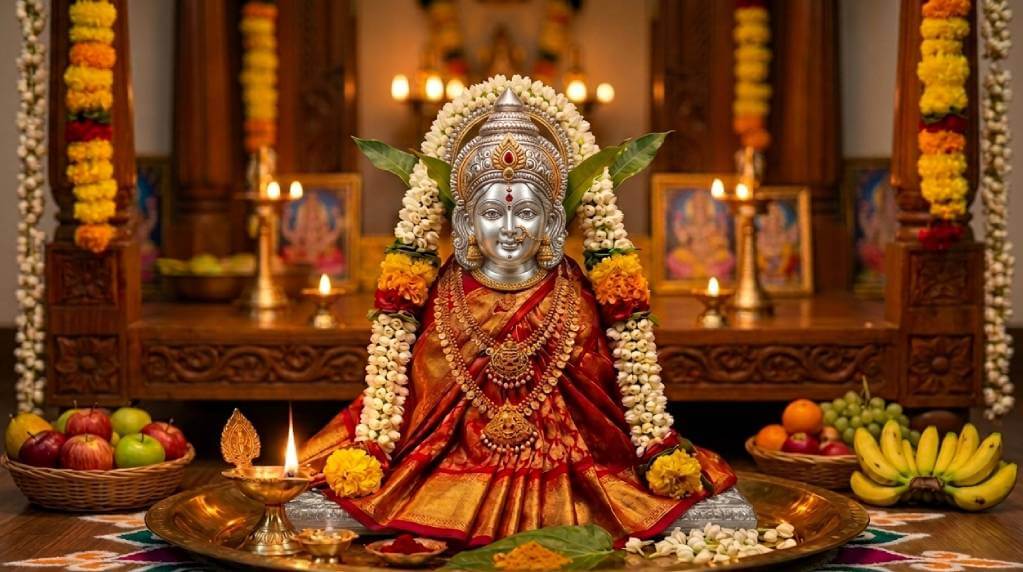
Ashtami is the peak of the Navaratri cycle. In the Devi Mahatmya, the great battle between Devi and Mahishasura reaches its climax across the closing days, and the Ashtami and Navami junction is held to be the most charged moment of the festival. Devi is worshipped here as Shakti, the power behind creation: fierce toward adharma, and a mother to those who take refuge in her.
That does not mean every household must reproduce a temple or pandal ritual. Practice varies by region and family: some perform Kanya Puja on Ashtami and some on Navami; some focus on Mahagauri; others follow a full Durga Puja sequence. A sincere, simple pooja done with steady attention is complete in itself.
Mahagauri and Maha Ashtami: related, but not identical
In the Navadurga sequence, Mahagauri is the eighth form of the Goddess and is popularly associated with the eighth day. She is described as white and serene, seated on a white bull, carrying a trident and a damaru. Tradition tells that Parvati’s long austerities for Shiva darkened her complexion, and that Shiva’s bathing her in the Ganga restored her radiant fairness, which is why she is called Mahagauri. She is worshipped for purity, peace and the fruit of tapas.
Bengali Durga Puja observes Maha Ashtami through the liturgical cycle of Durga Puja rather than through Mahagauri alone. Both are valid devotional frameworks, so it helps to know which one your family follows. A family doing Navadurga worship may focus on Mahagauri; a Bengali family follows its own paddhati; a simple home may offer lamp, flowers, naivedyam and aarti to Devi without attempting either.
Durga Ashtami home pooja checklist
| Keep ready | Purpose | Notes |
|---|---|---|
| Devi image or idol | Focus of worship | Use the form your family normally worships |
| Lamp, wick, ghee or oil | Deepam | Stable placement matters more than the number of lamps |
| Flowers and kumkum | Offering | Choose fresh, simple offerings |
| Naivedyam | Food offering | Fruit, a sweet or a family preparation |
| Pooja thali | Organises small offerings | Useful, though not ritually mandatory everywhere |
| Kanya Puja items | Only if observed | Food, respectful seating, gifts or thamboolam according to family custom |
Simple Durga Ashtami pooja at home
- Clean the altar and bathe before worship.
- Light the lamp and invoke Devi with your usual prayer.
- Offer flowers, kumkum and naivedyam.
- Recite a Devi stotra, Durga’s names, or one of the mantras below.
- If Kanya Puja is part of your tradition, perform it as described further down.
- Complete with aarti and distribute prasadam.
Mantras and stotras for Durga Ashtami
You do not need a long recitation. One verse chanted slowly, with attention, is better than many chanted in haste. These are well-known public verses that anyone may recite. Bija mantras and the Navarna mantra are traditionally received from a guru, so it is best to take those with guidance rather than from a web page.
Durga Gayatri
ॐ कात्यायनाय विद्महे कन्यकुमारि धीमहि । तन्नो दुर्गिः प्रचोदयात् ॥
Om Kātyāyanāya vidmahe, kanyakumāri dhīmahi, tanno Durgiḥ prachodayāt.
We meditate on Katyayani, the maiden Goddess; may Durga inspire and illumine us. Chant 3, 11 or 108 times, as your time allows.
Mahagauri dhyana verse (for the eighth form)
श्वेते वृषे समारूढा श्वेताम्बरधरा शुचिः । महागौरी शुभं दद्यान्महादेवप्रमोददा ॥
Śvete vṛṣe samārūḍhā śvetāmbaradharā śuciḥ, Mahāgaurī śubhaṃ dadyān mahādeva-pramodadā.
Seated on a white bull, white-robed and pure, may Mahagauri, who delights Mahadeva, grant auspiciousness.
Sarva Mangala Mangalye (from the Devi Mahatmya)
सर्वमङ्गलमाङ्गल्ये शिवे सर्वार्थसाधिके । शरण्ये त्र्यम्बके गौरि नारायणि नमोऽस्तु ते ॥
Sarva-maṅgala-māṅgalye śive sarvārtha-sādhike, śaraṇye tryambake gauri nārāyaṇi namo ‘stu te.
O auspiciousness of all that is auspicious, fulfiller of every aim, giver of refuge, three-eyed Gauri, Narayani: salutations to you. This is a gentle verse to close the pooja with.
Ya Devi Sarvabhuteshu (Devi Suktam)
या देवी सर्वभूतेषु शक्तिरूपेण संस्थिता । नमस्तस्यै नमस्तस्यै नमस्तस्यै नमो नमः ॥
Yā devī sarva-bhūteṣu śakti-rūpeṇa saṃsthitā, namastasyai namastasyai namastasyai namo namaḥ.
To the Goddess who abides in all beings in the form of Shakti: salutations to her again and again.
If your family reads longer texts. Many households read the Devi Mahatmya (Durga Saptashati) in parts across Navaratri, with the Argala, Kilaka and Kavacha as preliminaries. The Durga Suktam, the Mahishasuramardini Stotram or a Durga Ashtottara Shatanamavali are well-loved shorter choices for Ashtami. Follow the text and the recitation style your family already knows.
What is Kanya Puja?
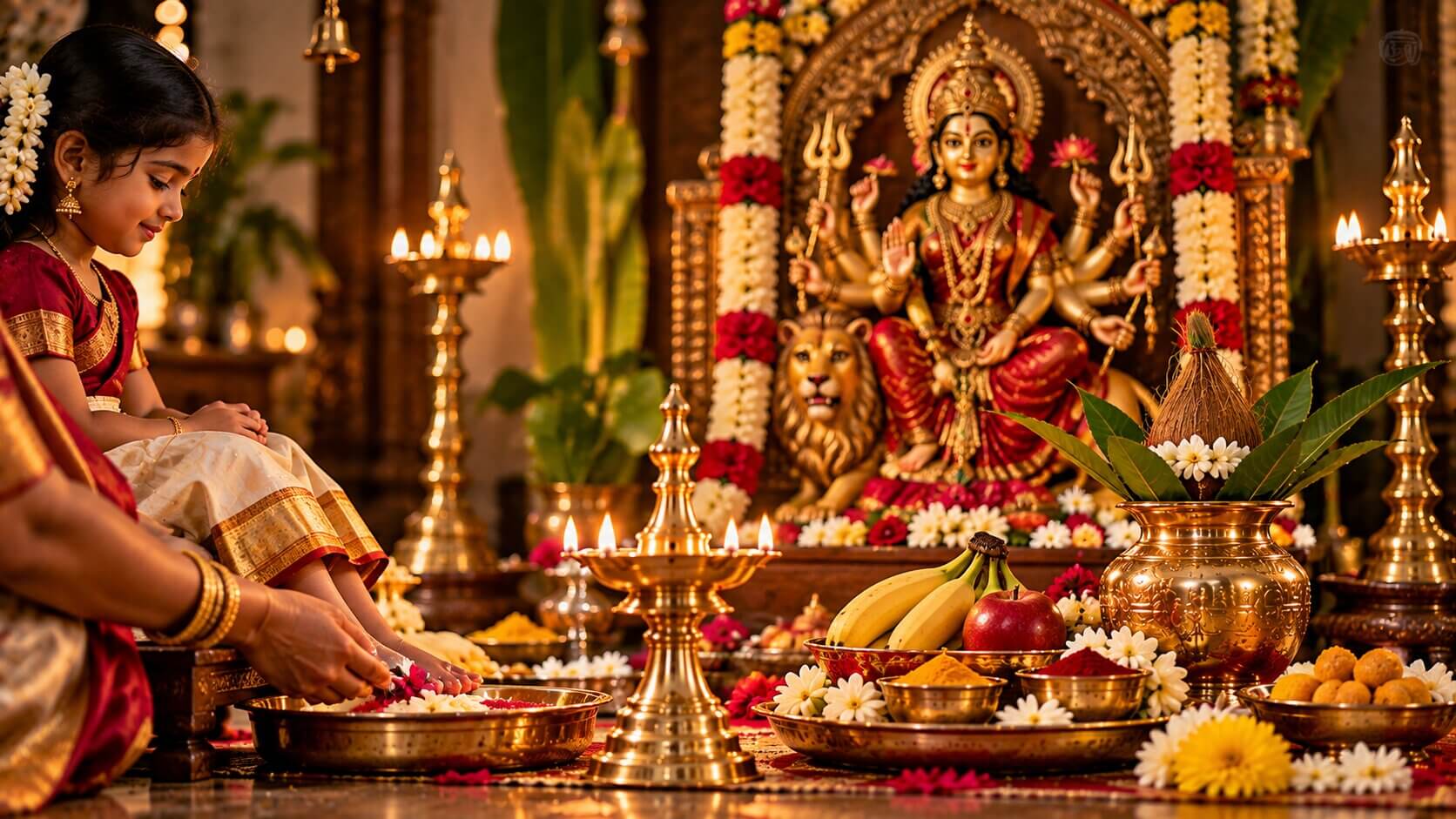
Kanya Puja (also called Kumari Puja, or Kanjak in some regions) honours young girls as living embodiments of Devi. The girls are welcomed respectfully, offered a meal, and given gifts or dakshina according to local custom. It may be held on Ashtami or on Navami, depending on the family and region.
In many North Indian homes nine girls are invited, often aged between about two and ten, sometimes with one boy who is received as Langur or Batuk. In Bengal and Nepal a single Kumari may be worshipped. These numbers are customs, not universal rules, so follow your own tradition.
The central principle is dignity. Invite only as many children as you can host comfortably, and confirm with their parents rather than treating attendance as a headcount. Check food restrictions, provide clean seating, never pressure a child into ritual gestures, and treat the meal and gift as hospitality. Keep the occasion about the children and not about photographs or social media. A smaller, respectful observance is better than a large, hurried one.
Kanya Puja step by step
- Invite the children respectfully, with their parents’ consent.
- Prepare a clean place to sit, and welcome them according to your family custom, for example by washing their feet gently.
- Offer kumkum or tilak, and gifts only in an age-appropriate, comfortable way.
- Serve the children first, with the meal your family tradition follows.
- Give dakshina, fruit, thamboolam or a small gift according to custom and budget.
- Take their blessings and close with aarti.
Foods commonly served. In North Indian Kanjak traditions, puri, kala chana and halwa are well known. Other regions use different foods. Let the family tradition and the children’s needs decide, rather than treating one menu as a universal Ashtami rule.
Sandhi Puja: do you need to do it at home?
Sandhi Puja is worship at the junction (sandhi) of Ashtami and Navami, especially prominent in Bengali Durga Puja. The traditional window is the last 24 minutes of Ashtami and the first 24 minutes of Navami. Because it is tied to the actual tithi junction, the time must be taken from a local Panchang, and one city’s clock time must never be copied to another.
According to tradition, this is the moment at which Devi appeared as fierce Chamunda and destroyed the demons Chanda and Munda. In formal pujas it is marked with 108 lamps and 108 lotuses, and in many places symbolic offerings such as a gourd, banana or sugarcane stand in for sacrifice.
A household that has never followed Sandhi Puja does not need to recreate this at home. If you would like to honour the moment quietly, light a lamp and chant the Durga Gayatri or a Devi stotra at the local Sandhi time. If it is already part of your family or community paddhati, follow that.
Durga Ashtami in Kerala and South India
South Indian Ashtami has its own character, shaped by the final three days of Navaratri.
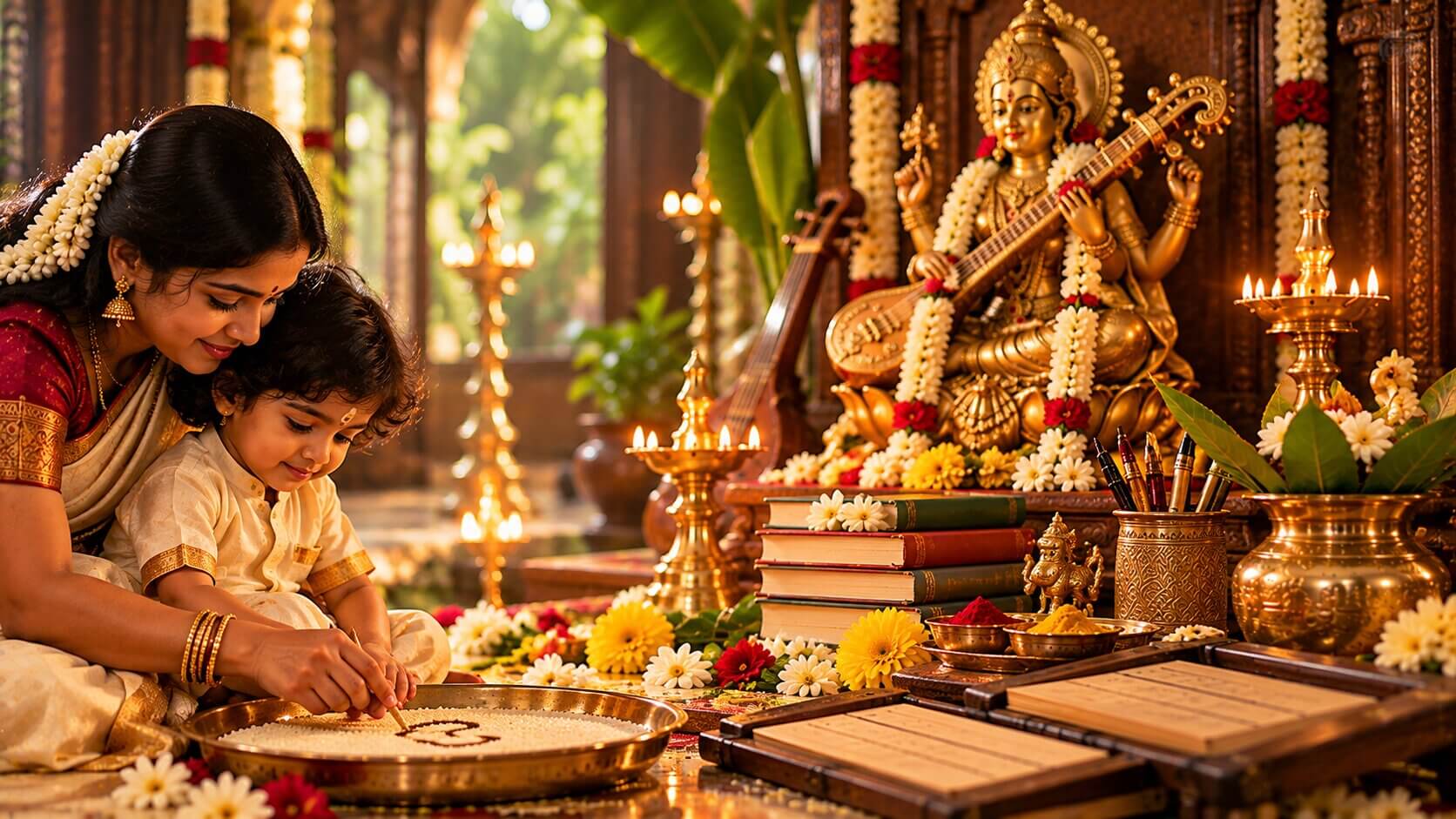
- Kerala: On the evening of Durgashtami, families observe Pooja Vaippu. Books, musical instruments and the tools of one’s work are cleaned, arranged before a lit lamp in the pooja room or temple, and left untouched. Mahanavami is Saraswati and Ayudha Pooja, and on Vijayadashami the books are taken back after prayers, followed by Vidyarambham for children. Malayalam calendars place Pooja Vaippu on the evening of 18 October in 2026, and Vidyarambham on Vijayadashami, which Kerala calendars commonly list as 21 October (some give 20 October), so confirm with your temple or Malayalam panchangam.
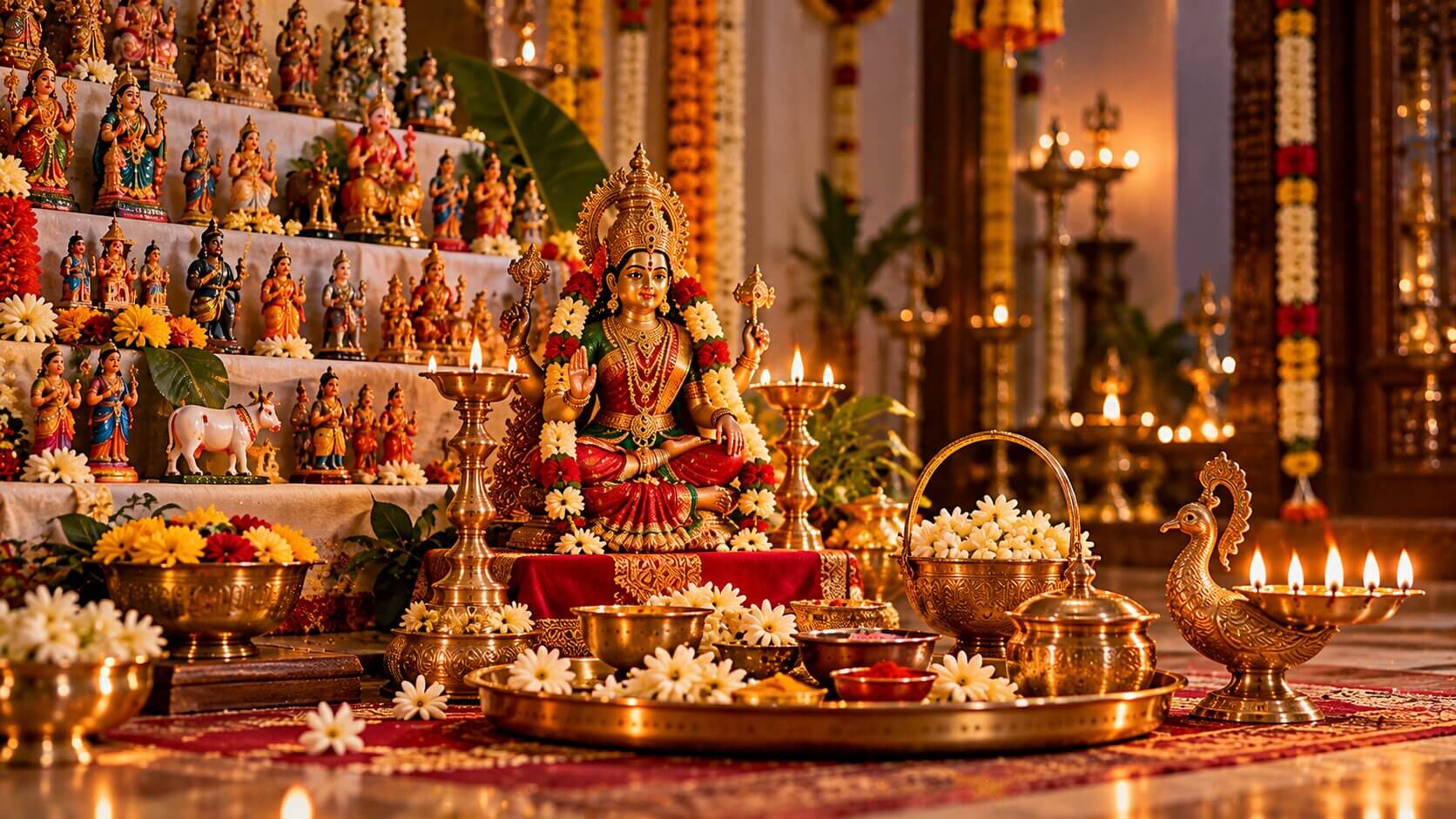
- Tamil Nadu: Ashtami falls within the Navaratri Golu days. Many homes offer sundal and light the lamp for Durga, Lakshmi and Saraswati in turn, with Saraswati and Ayudha Pooja on Navami.
- Telangana: Ashtami is the day of Saddula Bathukamma, when the Bathukamma festival of flowers closes.
If your family follows the South Indian pattern, the evening of Ashtami may matter more to you than the morning’s tithi, so go by your local panchangam.
Durga Ashtami fasting: what can vary
Some devotees keep the Navaratri fast through Ashtami and break it after Kanya Puja or on Navami. Others fast for a single day, and many South Indian families do not follow the same vrat-food rules at all. The timing of parana and the foods used to break the fast depend on the vrata being observed, so avoid presenting one regional fasting menu as a universal rule. Devotion does not depend on keeping a strict fast.
Ashtami offerings: simple home options
- Fresh flowers and kumkum for Devi
- Fruit, or a freshly prepared sweet
- Sundal, payasam or another family naivedyam in South Indian homes
- Halwa, puri and kala chana where the Kanya Puja tradition uses them
- A safely placed lamp and aarti items
- A modest gift or thamboolam for Kanya Puja, where observed
Use a sattvic preparation or fruit that suits your family tradition. There is no need to prepare an elaborate menu.
Anugrah Aura practical note
If a home uses several lamps for Ashtami, check the base stability and spacing before lighting them. A lamp with a broad, heavy base, such as a traditional brass vilakku, sits more steadily than a light one, and a plate or tray beneath it protects the altar. Keep kumkum, flowers and naivedyam on the thali, and do not let loose petals, cloth or dupattas come near the flame. These are practical altar-setup points, not prescriptions for how many lamps a family should light.
After Ashtami: Navami, Ayudha Puja and Vijayadashami
Ashtami leads straight into Navami, and South Indian calendars mostly place the book and tool worship of Saraswati and Ayudha Pooja on Maha Navami, 19 October (a few list 20 October), with Vijayadashami on 20 October closing the festival. Dates for these days vary by region, so please see our guides below for each one.
Frequently asked questions
1. Is Durga Ashtami on 18 or 19 October 2026?
In most of India, by the sunrise rule, it is 19 October. Some calendars outside India list 18 October. Check your local Panchang.
2. Is Kanya Puja done on Ashtami or Navami?
Both practices exist. Follow the day observed by your family or local tradition.
3. How many girls are invited for Kanya Puja?
Nine is common in North India, but the number varies by tradition and by what your family can host comfortably.
4. Is Mahagauri worshipped on Durga Ashtami?
In the Navadurga sequence, the eighth form is Mahagauri. Other regional Durga Puja traditions frame Maha Ashtami differently.
5. Which mantra should I chant on Durga Ashtami?
The Durga Gayatri and the Sarva Mangala Mangalye verse are simple choices. Use whatever your family already recites.
6. Do I need nine lamps on Ashtami?
No universal rule requires nine lamps. Use the lamp arrangement followed in your tradition and prioritise fire safety.
7. Can I perform a simple pooja if I am not fasting?
Yes. Fasting practices vary, and devotion does not depend on keeping a strict fast.
8. What should I offer as naivedyam?
A sattvic preparation or fruit that suits your family tradition.
Sources checked
- Drik Panchang: 2026 Hindu festival calendar
- Drik Panchang: Shardiya Navratri Sandhi Puja timing
- Drik Panchang: Malayalam calendar 2026 (Durgashtami and Vidyarambham)
- HinduTone: Panchangam, 19 October 2026 (Durga Ashtami, Maha Navami, Sandhi Puja)
- PanchangBodh: Durga Ashtami 2026
- HinduTone: Ayudha Puja 2026 date
- Hindu Blog: Vidyarambham in Kerala
Editorial note: Sandhi Puja is a tithi-junction ritual. This article explains the 2026 date and concept and gives example city times, but one city’s clock time should never be treated as universal.