


Mahalaya Amavasai 2026:
Mahalaya Amavasya, also called Sarva Pitru Amavasya, falls on Saturday, 10 October 2026 and marks the concluding day of Pitru Paksha. It is dedicated to remembering ancestors, particularly when a family wishes to honour the lineage collectively or when an individual ancestor’s tithi is not known.
Formal shraddha, tarpanam, tila homam and related rites are tradition-specific. A general blog should not present one simplified internet procedure as universally correct. Families that already follow these rites should continue with the method taught by their priest, elders or sampradaya.
Mahalaya Amavasya 2026 at a glance
Detail | 2026 guidance | Important note |
Date | Saturday, 10 October 2026 | Widely listed as the concluding Pitru Paksha day |
Also known as | Sarva Pitru Amavasya, Pitru Paksha Amavasya, Purattasi Amavasi | Names vary by region |
Primary focus | Ancestor remembrance and ancestral rites | Method varies by family and tradition |
Timing | Often associated with the afternoon/aparahna period | Exact windows are location-dependent; check a local Panchang |
What does Mahalaya Amavasya mean?
Pitru Paksha is a period set aside for remembrance of departed ancestors. Mahalaya Amavasya closes that fortnight and is often treated as the collective day for the pitrs. The observance is therefore different in tone from a celebratory festival: simplicity, remembrance, gratitude, charity and family duty are more central than decoration.
What can a family do at home on Purattasi Amavasi?
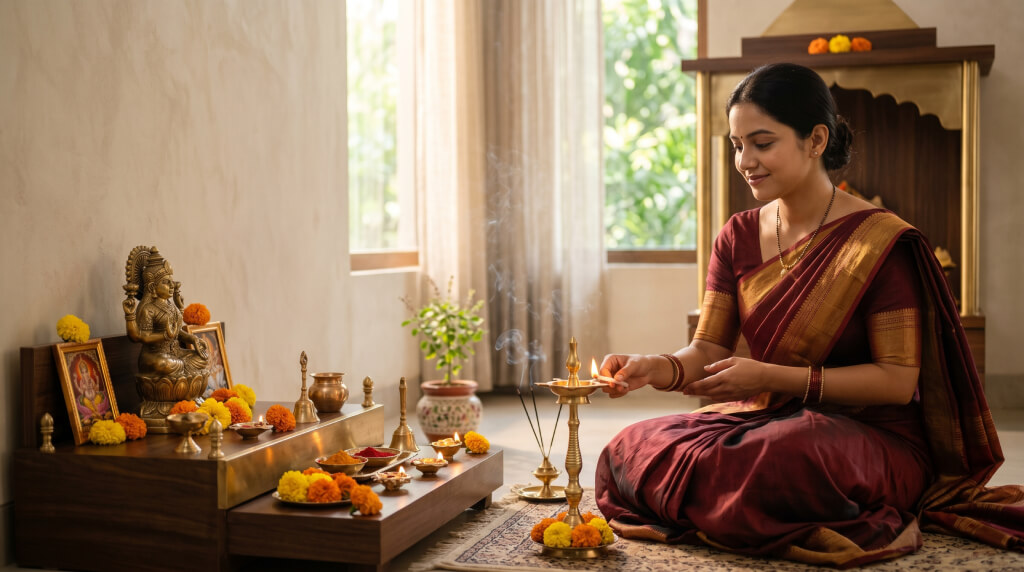
If your family already performs tarpanam or shraddha, use that established method. If you do not have a formal practice, a respectful home remembrance can remain simple rather than imitating priest-led rites from a video.
1. Clean the prayer area and keep the setting quiet and simple.
2. Remember departed family members by name where appropriate and offer a sincere prayer for them.
3. Light a lamp if that is part of your household practice.
4. Prepare food respectfully and follow your family’s custom regarding offerings.
5. Consider annadanam, feeding people in need, supporting a temple/community meal, or another act of charity in remembrance of ancestors.
6. If you wish to perform formal tarpanam, shraddha, tila homam or pinda-related rites and have not been taught the procedure, seek guidance from a knowledgeable priest.
Tarpanam, shraddha and simple remembrance are not the same thing
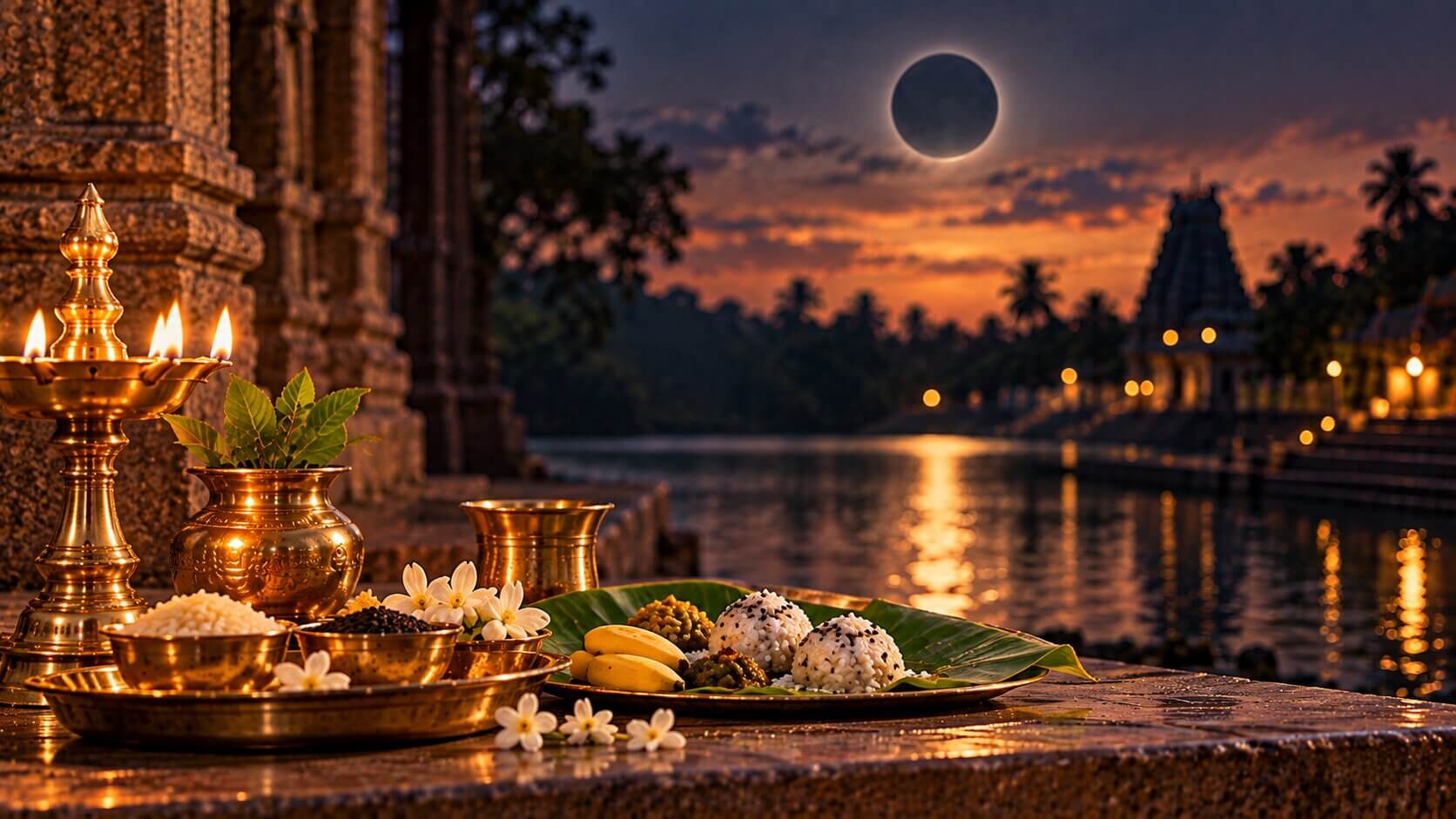
Tarpanam is primarily an offering of water to the pitrs (ancestors). In many traditions the water is offered with black sesame and darbha/kusha grass while ancestors are remembered by name, relationship or lineage. The exact mantras, hand positions, direction faced and eligibility rules are not identical across communities, which is why a family-taught procedure is more reliable than mixing instructions from unrelated online sources.
Shraddha is a broader ancestral rite performed with shraddha-reverence and sincerity. Depending on the family tradition and occasion, it may include sankalpa, tarpanam, pinda offerings, a prescribed meal, dakshina, feeding Brahmins or others, and charity. Tarpanam can therefore be one component of ancestral observance; it is not simply another word for the entire shraddha ceremony.
Pinda daan is another distinct element seen in many shraddha traditions. A pinda is a ritual food offering, commonly prepared from ingredients such as cooked rice and sesame according to the prescribed method. It should not be improvised from a generic shopping list: ingredients and procedure vary, and families that perform pinda daan usually follow an inherited or priest-guided sequence.
Simple ancestor remembrance is different again. A household that has not been taught formal pitru karma can still spend Mahalaya Amavasai in gratitude-remembering departed family members, lighting a lamp according to household custom, preparing a simple sattvic meal, giving food or useful items in charity, or supporting annadanam. This is meaningful remembrance, but it should not be labelled a complete shraddha when the family’s formal rite has additional requirements.
Who is Sarva Pitru Amavasya especially for?
Most Pitru Paksha shraddha days are connected to the lunar tithi on which an ancestor died. Sarva Pitru Amavasya provides a collective concluding observance and is especially associated with ancestors whose death tithi is unknown, rites that could not be performed on the corresponding tithi, and collective remembrance of the ancestral line. This is one reason the day has such prominence at the end of Pitru Paksha.
Can tarpanam be performed at home?
Many families do perform tarpanam or other pitru rites at home; others go to a temple, riverbank, seashore or another customary place. The question is less “Is home allowed?” than “What procedure does your family follow?” If you already know the family method, follow it. If you have never been taught the rite, seek guidance from a priest or knowledgeable elder familiar with your tradition before attempting a mantra- and procedure-specific version from the internet.
Why does the afternoon or aparahna period appear in Mahalaya searches?
Shraddha calendars commonly give Kutup, Rohina and Aparahna windows for ancestral rites. These are calculated from local daytime divisions, so exact clock times change by city. Refer a location-specific Panchang for the exact muhurta rather using one city’s time as if it applied everywhere.
Simple remembrance can be sincere and meaningful, while formal pitru rites should follow the procedure of the family tradition.
What items may be kept ready?
For a simple remembrance | For formal rites | Why the distinction matters |
Clean lamp, flowers if used, water, simple food offering | Sesame, darbha, specific vessels, ritual ingredients as instructed | Formal samagri depends on the rite and tradition |
A clean plate or pooja thali | Dedicated ritual vessels if prescribed | Do not buy a generic kit and assume it fits every lineage |
Charity/annadanam plan | Priest-led sankalpa or homam if chosen | Service can accompany remembrance but does not erase ritual differences |
Mahalaya Amavasai in South India
Terminology and practice vary across Tamil Nadu, Kerala, Karnataka and Andhra/Telangana. Tamil families may use the term Amavasai; Kerala has its own strong ancestral-remembrance traditions at other points in the calendar as well. This is why a location-aware Panchang and family practice are more reliable than a single nationwide timetable.
Pitru Paksha and Mahalaya Amavasya: how the calendar works
Pitru Paksha is the ancestral fortnight in the lunar calendar. Families who know the lunar tithi of an ancestor’s death traditionally perform the principal shraddha on the corresponding tithi during Pitru Paksha. Mahalaya Amavasya, the final Amavasya of the fortnight, has a collective role and is therefore also called Sarva Pitru Amavasya.
This explains why Mahalaya is especially important when the exact death tithi is unknown, when an observance could not be completed on the corresponding day, or when the family remembers the ancestral lineage collectively. It should not be interpreted to mean that all tithi-specific family practices become irrelevant.
Tarpanam: what the water offering represents
Tarpanam is an offering-commonly of water, and in many traditions water combined with black sesame-made with remembrance of the ancestors. Darbha grass, a specific posture, direction and recitation may form part of the procedure depending on the tradition. The ritual is concise in appearance but highly structured in families that inherit a formal method.
A priest may ask about gotra, lineage, the departed relatives being remembered, or the family’s customary method before giving instructions.
Shraddha and pinda daan: where they fit
Shraddha is a broader ancestral rite performed with reverence and prescribed offerings. Pinda daan refers to the offering of pindas-typically prepared from food ingredients according to the ritual tradition-to the ancestors. Pinda daan may form part of shraddha, but the two terms are not identical.
Term | What it broadly refers to | Why you should not treat it as a synonym |
Tarpanam | Water-based ancestral offering, often with sesame | Can be one component of ancestral rites |
Shraddha | A prescribed rite performed for departed ancestors | Broader than a water offering |
Pinda daan | Offering of ritual pindas to the ancestors | May be part of shraddha; procedure varies |
Simple remembrance | Prayer, gratitude, lamp/food/charity according to household custom | Meaningful remembrance, but not automatically a formal shraddha |
Why black sesame and darbha appear in Mahalaya rituals
Black sesame and darbha grass appear repeatedly in ancestral-rite descriptions because they have established ritual roles in many traditions. Their use, however, belongs inside a complete inherited procedure. Buying sesame and darbha does not by itself constitute tarpanam or shraddha. If a family has a priest-guided method, the priest’s samagri list and sequence should take precedence over a generic online checklist.
Annadanam and charity on Mahalaya Amavasya
Feeding others is one of the most accessible ways families express remembrance. Depending on local practice, this may mean feeding invited people, supporting annadanam at a temple or charitable organisation, giving groceries, or providing a meal to someone in need. The act should be done respectfully and within the family’s means; there is no spiritual value in creating waste or financial pressure.
What should you avoid doing on Mahalaya Amavasya?
- Do not combine instructions from several unrelated traditions and call the result a complete shraddha.
- Do not follow one city’s muhurta as if it applies across India; tithi and Aparahna windows are location-sensitive.
- Do not treat the day primarily as a shopping occasion. The focus is remembrance and ancestral duty.
- Do not assume a simple home prayer is meaningless because you cannot perform a formal rite.
- If your family has an established priest or inherited procedure, do not replace it with a generic online method.
Frequently Asked Questions
1. When is Mahalaya Amavasya in 2026?
It is observed on Saturday, 10 October 2026 in the calendars checked for this guide.
2. Is Mahalaya Amavasya the same as every monthly Amavasya?
No. It is the concluding Amavasya of Pitru Paksha and has a specific ancestral-remembrance context.
3. Can I perform tarpanam by following an online article?
If your family has not taught you the procedure, it is safer to ask a knowledgeable priest or elder. Formal ancestral rites should not be reduced to a universal checklist.
4. What can I do if I do not know the ancestor’s tithi?
Mahalaya/Sarva Pitru Amavasya is traditionally associated with collective remembrance, including cases where the exact tithi is unknown. Follow your family’s practice for formal rites.
5. Is charity appropriate on this day?
Annadanam and other acts of charity are commonly associated with remembrance of ancestors in many traditions.
Sources checked
Drik Panchang – 2026 Pitru Paksha Shraddha dates
Drik Panchang – 2026 Amavasya Shraddha / Sarva Pitru Amavasya
Editorial note: Calendar/date information is cross-checked against Panchang sources. Because shraddha and tarpanam procedures differ by lineage and region, the article deliberately explains concepts without publishing a universal mantra-by-mantra ritual.
Related Anugrah Aura Guides