


Kanda Shashti Vratam: Quick Overview
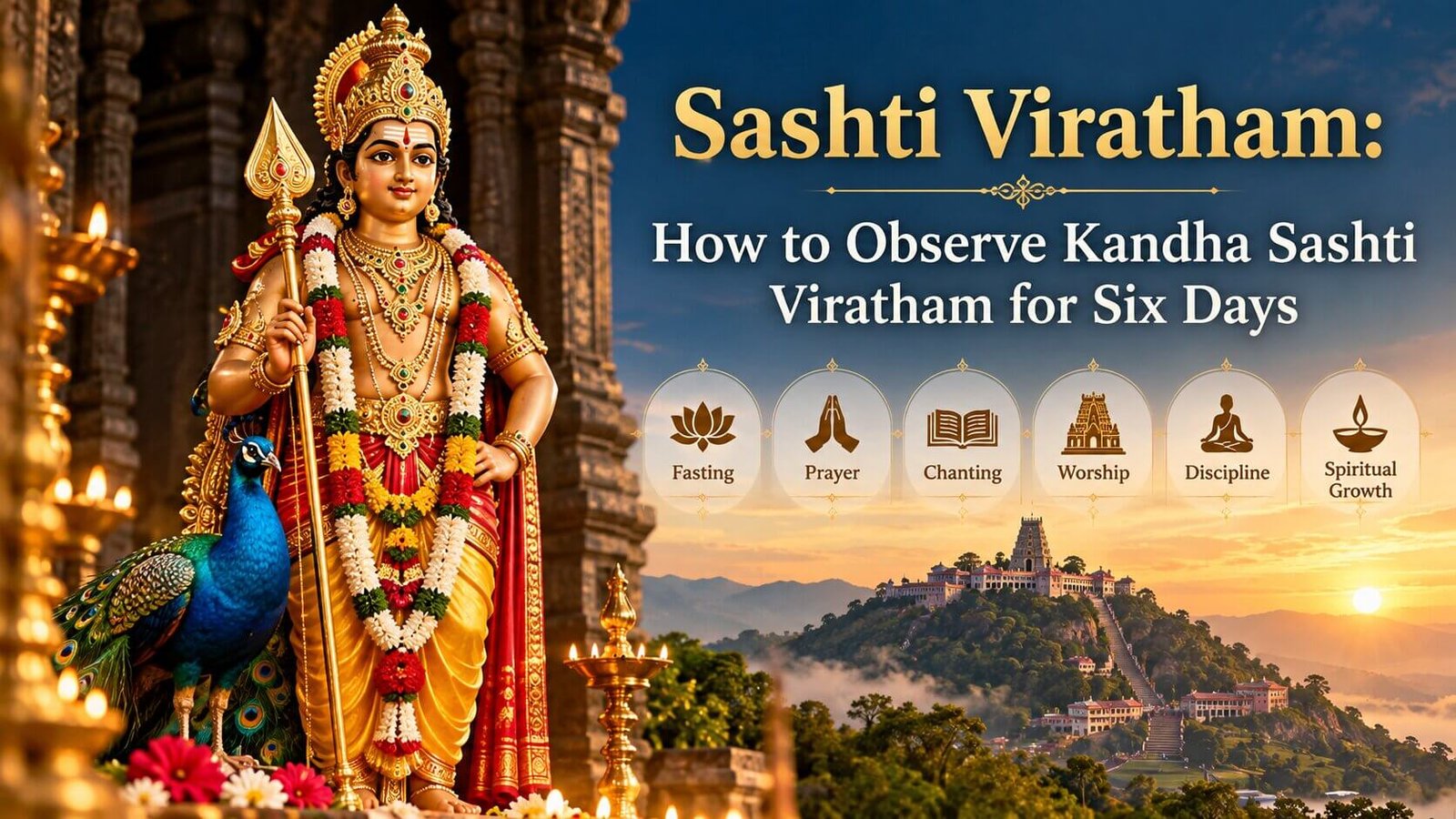
Sashti Viratham (சஷ்டி விரதம்) is a devotional observance dedicated to Lord Murugan, also known as Skanda, Subrahmanya, Kartikeya, Kandan and Arumugam. During the annual Kanda Sashti festival, devotees give six days to prayer, fasting, self-discipline and remembrance of Lord Murugan, ending with Soorasamharam.
But how should you observe Kanda Sashti Viratham? Is fasting without food compulsory? What prayers should you chant? Can you keep the viratham while working? And how can writing Om Saravanabhava 108 times become part of your daily worship?
The answer begins with the meaning of viratham. It is a spiritual vow, and fasting is only one way of keeping it. Some devotees follow strict dietary austerities, while others eat simple vegetarian meals and spend more time in prayer. The method varies, but the intention is the same: to approach Lord Murugan with devotion, humility and a disciplined mind. Everything in this guide is a suggestion drawn from common household practice, so please follow your own family or temple tradition.
In 2026, Kanda Sashti Viratham begins on November 10 and continues through November 15, the day of Soorasamharam. Thirukalyanam follows on November 16.
This guide explains how to begin the viratham, set up a six-day prayer routine, practise Likhita Japa, choose devotional items for your altar and complete the observance according to your household tradition.
What Is Sashti Viratham?
The word Sashti (also spelt Shashti) refers to the sixth lunar day, and viratham comes from the Sanskrit vrata, meaning a vow or religious observance. In this guide, “Sashti” is used for the vow and “Shashti” for the lunar day. Sashti Viratham is therefore a devotional commitment associated with Lord Murugan and the sacred Shashti tithi.
[ You may also see it written as: Sasti Viratham/ Shasti Viratham/ Shashti Vratham/ Kandha Sashti Viratham/ Kanda Sasti Viratham/ கந்த சஷ்டி விரதம்]
The annual observance takes place in the Tamil month of Aippasi, generally in October or November, and for many Tamil families it is the most important period of Murugan worship. The six days lead up to Lord Murugan’s victory over Surapadman, an asura whose arrogance and misuse of power disturbed the divine order.
Devotees also read the story as an invitation to examine their own conduct, cultivate self-control and seek the wisdom represented by Murugan’s sacred Vel.
Why Viratham Is Broader Than Fasting
Fasting is central to many Sashti traditions, but the word vrata covers more. A vow may include dietary restraint, daily prayer, truthfulness, avoiding anger, limiting unnecessary indulgence and practising compassion. The devotional writings associated with Tiruchendur describe Kanda Sashti fasting as observed in different ways, with a purpose that extends beyond food.
A person who eats a suitable meal but keeps sincere prayer and disciplined conduct is still taking part in the observance. Someone who follows a strict dietary fast should likewise remember that humility and devotion come first.
Kanda Sashti Viratham 2026 Dates
The annual observance begins on Tuesday, November 10, 2026. The reflection themes in the last column are an optional framework, explained in the six-day routine below.
| Day | Date | Observance | Reflection theme |
|---|---|---|---|
| Day 1 | Tuesday, November 10 | Begin the vow and set up your daily prayers | Faith |
| Day 2 | Wednesday, November 11 | Continue daily Murugan prayers | Courage |
| Day 3 | Thursday, November 12 | Continue daily Murugan prayers | Wisdom |
| Day 4 | Friday, November 13 | Continue daily Murugan prayers | Compassion |
| Day 5 | Saturday, November 14 | Prepare for Soorasamharam | Inner strength |
| Day 6 | Sunday, November 15 | Soorasamharam | Gratitude |
| Following day | Monday, November 16 | Thirukalyanam |
The festival runs for six days, whether or not Shashti tithi falls on each of them. For Chennai, the Shashti tithi associated with Soorasamharam begins at about 11:23 PM on November 14 and ends at about 2:00 AM on November 16, so the festival dates and the tithi timings do not line up exactly.
For the complete festival calendar, significance and Soorasamharam details, read our Kanda Sashti 2026 guide.
Why Do Devotees Observe Sashti Viratham?
In the Kanda Puranam tradition, Lord Murugan receives the divine Vel from Goddess Parvati and confronts the forces led by Surapadman. The battle ends with Surapadman’s defeat and transformation, his final forms becoming the peacock and the rooster associated with Murugan. Devotees often read this as a reminder that arrogance, ignorance and harmful tendencies can be overcome through divine wisdom. Check the complete Soorasamharam story and about Tiruchendur festival in our guide
Sashti Viratham gives the devotee a period of intentional spiritual discipline. Instead of letting daily habits decide every action, the devotee makes a conscious commitment to prayer and self-restraint. Some pray for patience, others for family wellbeing, marriage, children or strength in difficult circumstances. These intentions belong to the devotional life of the worshipper and are not guarantees of any particular outcome.
How to Prepare for Kanda Sashti Viratham
Preparation makes six days of observance easier to follow consistently. Rather than deciding everything on the first morning, arrange your prayer space, choose your devotional practices and plan a realistic routine beforehand.
Decide How You Will Observe the Viratham
No single fasting method is compulsory for all devotees. Some families follow a one-meal vegetarian fast, others take fruit and milk, and others eat simple vegetarian food while observing greater restraint in other areas. Choose a method suited to your health, responsibilities and family tradition.
If you have diabetes, are pregnant or breastfeeding, take medication that requires food, have a history of eating disorders or have another medical condition, seek medical guidance before changing your diet. Fasting without water or stopping prescribed medication is not recommended.
Prepare a Murugan Pooja Space
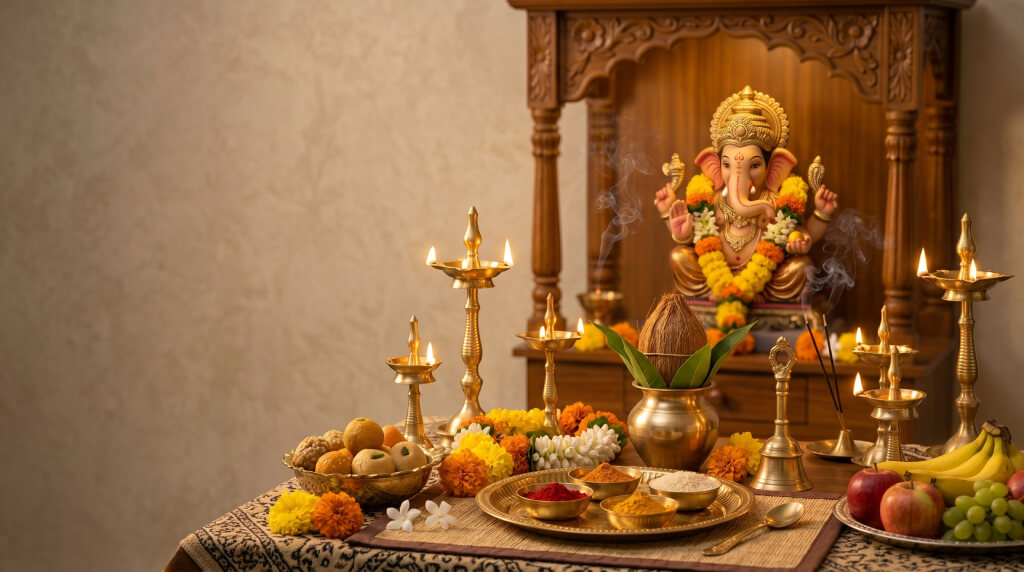
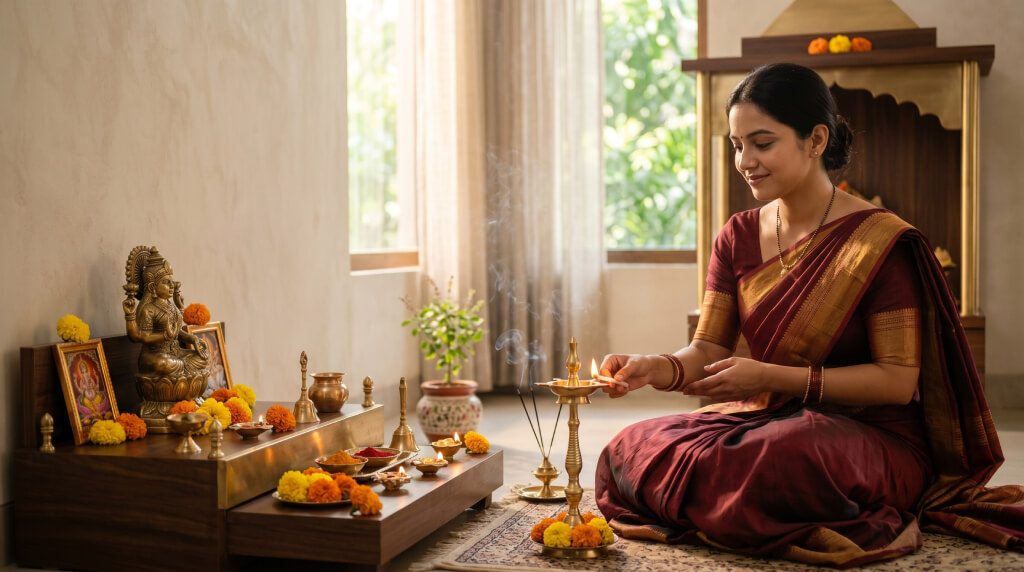
Choose a clean and peaceful place for worship. A simple altar can include a picture or idol of Lord Murugan, a lamp, fresh flowers and a small plate for offerings. Some households also place a standing brass Vel on the altar, since the Vel represents the sacred spear with which Murugan defeats Surapadman. If you already keep a Murugan altar, you need nothing new to begin. Those setting up a new altar will find suggestions in the altar section below.
Arrange the Pooja Essentials
Depending on your household practice, you may prepare vibhuti, kumkum, sandalwood paste, cotton wicks, ghee or lamp oil, flowers, incense, camphor and simple naivedyam. A brass pooja plate helps keep the materials together.
Choose a Prayer Routine
Select the prayers you can realistically recite every day. You might choose Om Saravanabhava, Kanda Sashti Kavacham, Thiruppugazh, Kandar Anubhuti or another familiar Murugan hymn, and you may add Likhita Japa, the practice of writing a mantra repeatedly with attention and devotion. A consistent routine is worth more than an elaborate schedule that becomes hard to maintain.
How to Start Sashti Viratham: A Simple Morning Procedure
Many devotees search for Sashti Viratham Irukum Murai (சஷ்டி விரதம் இருக்கும் முறை), meaning how to observe the Sashti vow. The following is a simple home routine, not a temple-prescribed procedure.
1. Begin With Cleanliness
Wake at a suitable time, bathe or wash, and wear clean clothes. Clean the worship area and arrange what you need for the morning prayer, so that the observance begins with care and attention.
2. Light the Pooja Lamp
Place the lamp on a stable, heat-resistant surface and light it according to your household custom. Some devotees use ghee and others use suitable lamp oil. The flame is traditionally associated with divine knowledge and the removal of darkness.
3. Offer Flowers and Prayers
Offer fresh flowers before Lord Murugan’s image, idol or Vel, and apply vibhuti, sandalwood paste or kumkum as your family tradition prescribes. Begin with a simple invocation:
Om Saravanabhava
ஓம் சரவணபவ
You may chant it 6, 11, 36 or 108 times, depending on your practice.
4. Make Your Sankalpam
A sankalpam states the intention behind a religious observance. Formal versions vary among traditions, but for simple household worship a personal prayer is enough:
“Lord Murugan, I begin this Kanda Sashti Viratham with devotion. May your grace guide me towards wisdom, courage, patience and compassion. Help me remain sincere in my prayers and mindful of my actions.”
5. Begin Your Chosen Observance
Follow the dietary practice you have selected and carry on with your normal responsibilities, making a conscious effort to avoid unnecessary anger and harsh speech.
6. Continue With Evening Prayer
In the evening, light the lamp if appropriate and recite a familiar Murugan hymn. You may also set aside time for reading, chanting or writing Om Saravanabhava. Repeating this routine each day gives the six days continuity.
A Six-Day Sashti Viratham Prayer Routine
There is no universal rule to chant a different mantra on each day. Many devotees repeat the same prayers throughout the festival, while others follow their temple or family tradition. For those who like a structured routine, the six themes below offer a simple way to reflect on Murugan’s qualities. They are a modern reflection framework, not an ancient prescribed sequence.
Day 1: Faith
November 10, 2026
Begin your viratham with sincerity. Clean the altar, light the lamp and establish your daily prayers. Ask yourself what quality you wish to cultivate over the coming six days. A suitable prayer is:
“Lord Murugan, may my faith guide me towards thoughtful and compassionate action.”
Tie the Kaapu. Many families begin the viratham by tying a Kaapu, a clean yellow cotton thread. Place the thread before Lord Murugan during your pooja and pray for his blessings, protection and the strength to complete the six days. Generally, men and unmarried women tie it on the right wrist and married women on the left, unless your family or temple follows a different custom. You may ask a family elder or priest to tie it for you. Wear it through the six days, and see the section on completing the viratham for how to remove it respectfully. Some devotees also visit a Murugan temple on this first day to receive blessings before they begin.
Day 2: Courage
November 11, 2026
Lord Murugan is revered as a divine warrior and protector. Reflect on the courage needed to face difficulties without abandoning kindness or good judgement, and consider one responsibility or challenge you can approach more constructively.
Day 3: Wisdom
November 12, 2026
The Vel is widely understood as a symbol of divine knowledge. Use this day to reflect on the difference between impulse and wisdom. Read a Murugan hymn slowly and consider its meaning. If you practise Likhita Japa, write Om Saravanabhava with attention rather than rushing to finish.
Day 4: Compassion
November 13, 2026
Devotion is also expressed in the way we treat others. Continue your prayers and consider an act of kindness, service or generosity. Avoid harsh words where possible, and reflect on how patience can become part of ordinary family life.
Day 5: Inner Strength
November 14, 2026
As Soorasamharam approaches, reflect on perseverance. Inner strength does not always mean physical endurance. It may mean acknowledging a mistake, resisting an unhealthy habit or staying calm during uncertainty. Continue your prayers and prepare the altar for the concluding day.
If you plan to visit a temple for Soorasamharam, confirm the festival schedule in advance and make your arrangements.
Day 6: Gratitude and Transformation
November 15, 2026
The sixth day marks Soorasamharam, Lord Murugan’s victory over Surapadman, whose transformation into the peacock and rooster many devotees take as a symbol of turning destructive qualities towards a higher purpose. Offer prayers of gratitude and reflect on what the six days have taught you. If possible, visit a Murugan temple or follow the Tiruchendur celebrations.
At Tiruchendur, Soorasamharam is reenacted as part of the temple’s major annual festival. In past years the reenactment has been held on the seashore in the evening, but timings vary, so confirm with the temple. Those observing Kanda Sashti at home may perform special worship, light a lamp, recite Kanda Sashti Kavacham and offer naivedyam.
Prayers to Chant During Sashti Viratham
The choice of hymn depends on personal familiarity and tradition.
Om Saravanabhava
Om Saravanabhava is one of the most familiar invocations of Lord Murugan. It recalls his association with Saravana Poigai and is widely used in Murugan worship. The mantra may be repeated aloud, silently or in writing, and for devotees who want a quiet daily practice, writing it can sit comfortably beside chanting.
Kanda Sashti Kavacham
Kanda Sashti Kavacham is a celebrated Tamil hymn traditionally attributed to Devaraya Swamigal. The word kavacham means armour, and devotees recite it as a prayer for protection, strength and wellbeing. During Kanda Sashti, some families recite the whole hymn daily, while others listen to it or read selected passages. Understanding the meaning deepens the experience.
Thiruppugazh
The Thiruppugazh hymns of Arunagirinathar praise Lord Murugan in rich devotional poetry on themes of surrender, wisdom and divine grace. A devotee may choose one familiar hymn and recite it regularly through the six days.
Vel Maaral
Vel Maaral is a Tamil devotional composition centred on the sacred Vel of Lord Murugan, traditionally compiled from the opening verses of Arunagirinathar’s Vel Vaguppu. Some devotees recite it as part of regular worship, particularly when honouring the Vel. If the verses are new to you, following the lyrics in a devotional book helps establish a steady practice.
What Is Likhita Japa?
Likhita Japa (லிகித ஜபம்) is the devotional practice of repeatedly writing a sacred mantra or divine name. Likhita means written, and japa means repetition of a mantra. Unlike verbal chanting, it involves writing the mantra by hand while keeping the mind on its sound, meaning or divine association. For example, a devotee may write:
ஓம் சரவணபவ
Om Saravanabhava
The mantra can be written in Tamil, in English transliteration or in another familiar script, provided it is written respectfully and accurately.
Likhita Japa is recognised in Hindu devotional and yoga traditions as a form of mantra practice. The Divine Life Society and Sivananda Yoga Vedanta Centres describe mantra writing as a way of engaging attention through the coordinated work of the mind, eyes and hand. It suits devotees who concentrate more easily when their hands are quietly occupied.
Benefits of Likhita Japa: Why Write Om Saravanabhava?
The benefits of Likhita Japa are traditionally described in spiritual terms, and its practical value lies in giving you a deliberate period of attention and reflection. These benefits are devotional, not medical. The practice may feel calming and meaningful, but it is not an established treatment for anxiety, depression or any other health condition.
1. It Encourages Concentration
While you write, the eyes follow the mantra, the hand forms each letter and the mind returns again and again to the divine name. This gives attention a clear object, and when thoughts wander you simply return to the next repetition. Teachers such as Swami Sivananda place particular emphasis on concentration as a fruit of mantra writing.
2. It Creates a Quiet Period of Prayer
Modern days move quickly between work, family and screens. Writing a mantra gives you a reason to sit still for a few minutes at the pace of handwriting. Where chanting involves speech and hearing, writing adds the movement of the hand and the sight of each word, and some devotees softly pronounce the mantra as they write, which brings all of these together. The aim is not to silence the mind completely but to keep returning to the sacred name.
3. It Builds a Routine and Self-Discipline
The practical difficulty with any viratham is finding time for prayer every day. A defined writing practice gives you something clear to begin and complete, and returning to it for six consecutive days helps form a devotional habit. Writing the same mantra repeatedly also shows you your impatience and the urge to hurry, and the practice invites you to slow down and continue deliberately. The value lies in consistency, not in treating the number as a competition.
4. It Deepens Remembrance and Reflection
For a Murugan devotee, Om Saravanabhava is a sacred invocation, so writing it repeatedly can be an act of devotion in itself. A session can open with a simple intention and close with gratitude, and over six days you may reflect on patience, courage, wisdom, compassion, inner strength and thankfulness. Some devotees keep their completed mantra-writing books as devotional keepsakes.
5. It Is Accessible
Not everyone can undertake prolonged fasting, elaborate rituals or long temple visits. Likhita Japa needs only a pen and a notebook, and it adapts to your ability. If writing 108 repetitions is difficult, choose fewer, and if hand mobility is limited, verbal or mental japa serves the same purpose. The essential point is devotion, not physical strain.
Why Write Om Saravanabhava 108 Times?
The number 108 has longstanding significance in Hindu devotional traditions. It is widely used in japa practice and is reflected in the 108 beads of a traditional japa mala. Writing 108 repetitions gives a devotee a complete daily cycle, and across the six days of Kanda Sashti it comes to 648 repetitions.
There is no universal rule that every Murugan devotee must write exactly 108 times. The number provides structure, while the spiritual weight comes from the attention and sincerity with which the mantra is written.
How to Practise Om Saravanabhava Likhita Japa
Include a writing session after your morning prayer or during a quiet evening period.
- Choose a peaceful place. Sit comfortably at a desk or table, with the book at a suitable height and good lighting. Avoid a strained posture.
- Begin with a short prayer. Offer a simple invocation to Lord Murugan, and chant Om Saravanabhava a few times before you start.
- Write slowly and attentively. Write each repetition clearly, in Tamil or English transliteration, without rushing to fill the page.
- Keep your attention on the mantra. You may repeat it silently as you write. When your mind wanders, gently return to the writing.
- Complete your chosen number. If 108 is difficult, choose a smaller number. A shorter practice done sincerely is better than one that causes discomfort or frustration.
- Close with gratitude. Offer a short prayer when you finish. Keep the book respectfully in the pooja room or another clean place, and consider reading a Murugan hymn afterwards.
Anugrah Aura Sashti Pooja Companion: Om Saravanabhava 108 Writing Book
For devotees who want a dedicated six-day practice, Anugrah Aura’s Sashti Pooja Companion brings written mantra repetition together with traditional Murugan devotion in one A4 devotional book.
It gives numbered writing space for Om Saravanabhava 108 times on each of the six days, and a practical guide to Shashti pooja at home. The six daily pages follow the six sacred abodes of Murugan, the Arupadai Veedu, each with its deity, a short Sashti story and prayers, in Tamil with Roman transliteration. The book closes with a thanksgiving prayer and a completion page, and includes the Vel Maaral verses for recitation.
Use it after your morning prayer, after lighting the evening lamp or in any quiet part of the day. It also makes a meaningful gift for someone beginning Kanda Sashti Viratham.
How to Include Vel Maaral in Your Daily Viratham
Vel Maaral sits well beside Likhita Japa as a separate devotional activity. You might light the lamp and chant Om Saravanabhava, complete the day’s writing, and then read a selection of Vel Maaral verses. Some devotees recite the entire composition by their customary method, while beginners can start with a manageable portion. Someone who prefers only chanting or only writing may of course follow that path.
Setting Up a Murugan Altar for Six Days of Prayer
The altar need not be elaborate. Choose a clean, stable surface and arrange the items so that the lamp can be lit safely and prayers offered comfortably.
Brass Murugan Idol
A Brass Murugan Idol is a traditional focal point for household worship, before which devotees offer flowers, light a lamp and chant Murugan’s names. A compact idol suits a small pooja shelf. Anugrah Aura offers Brass Murugan Idols for devotees who wish to begin or expand a Murugan worship space.

Brass Murugan Vel
The Vel holds particular importance during Kanda Sashti. In the traditional narrative, Goddess Parvati gives the Vel to Murugan, who uses it against Surapadman, and for devotees it represents divine wisdom and the power to overcome ignorance. Anugrah Aura’s 6-inch Brass Murugan Vel stands on its own square pedestal, with decorative engravings and green stone accents. It is available separately, so devotees who already have their pooja essentials can add only the Vel.
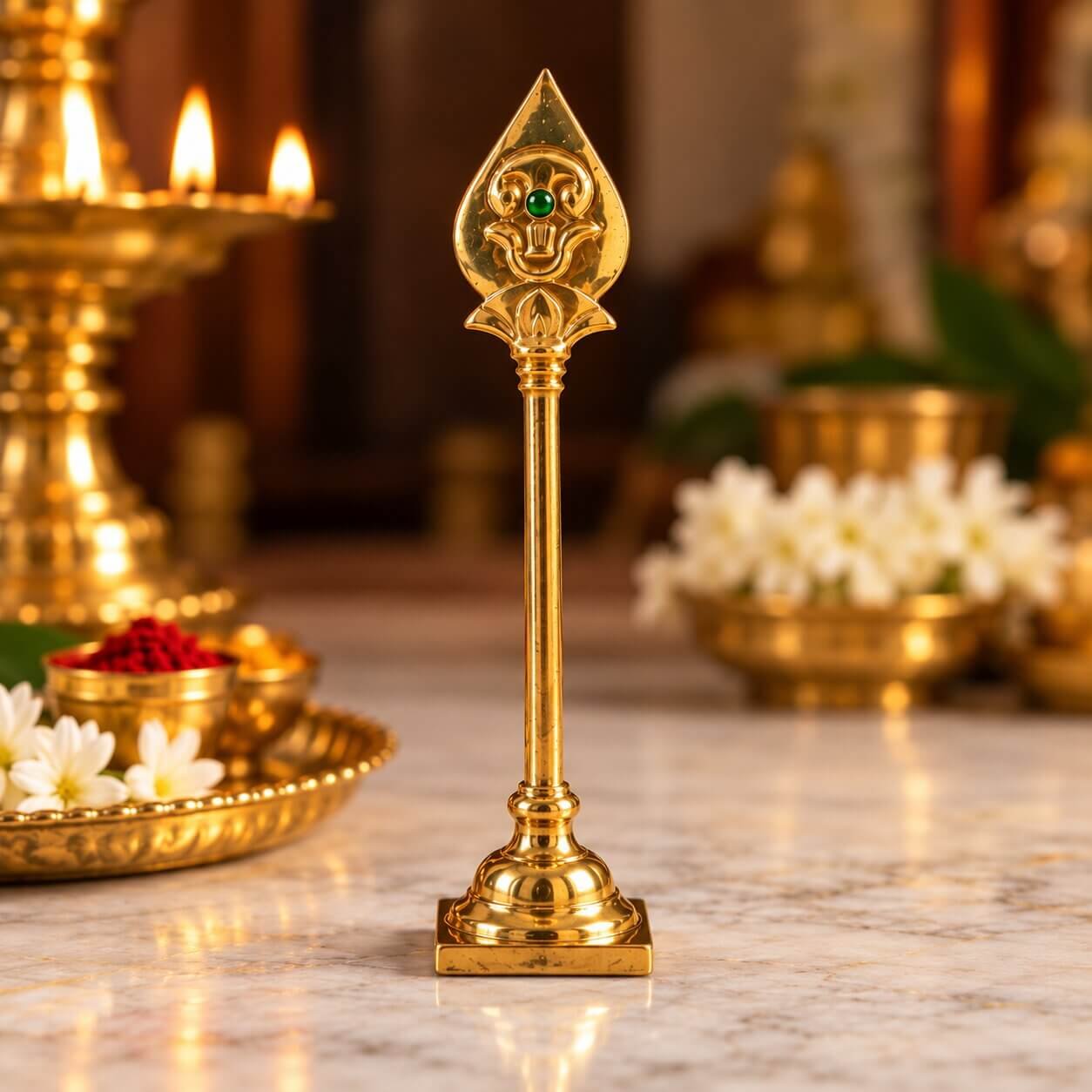
Brass Murugan Vel OM Vilakku
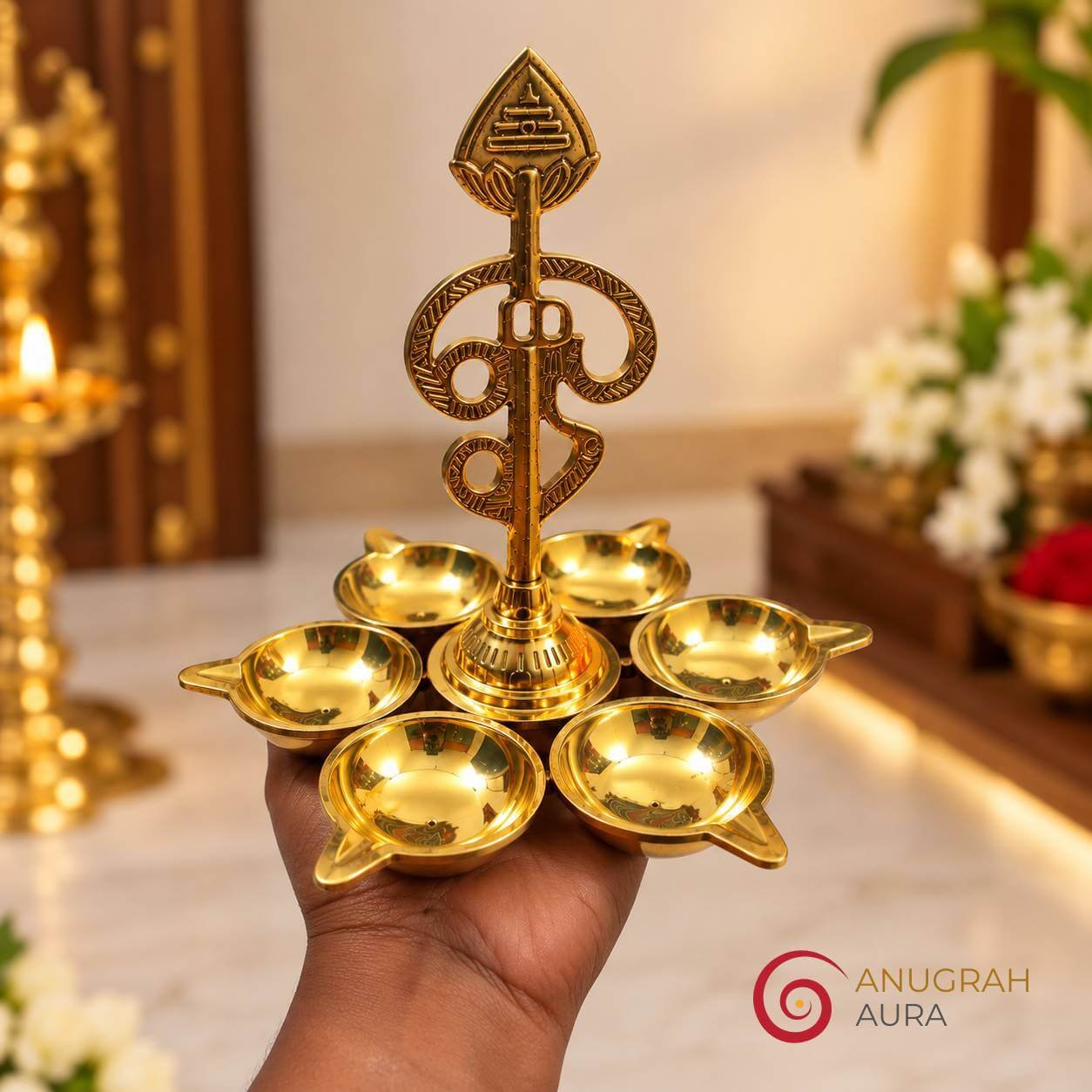
Lighting a lamp is a familiar part of Hindu household worship. The Brass Murugan Vel OM Vilakku combines the sacred OM and Vel motifs with six diya cups, which may appeal especially to those keeping a six-day festival. Light as many wicks as your household custom and safe lamp use allow.
Brass Peacock Lamp
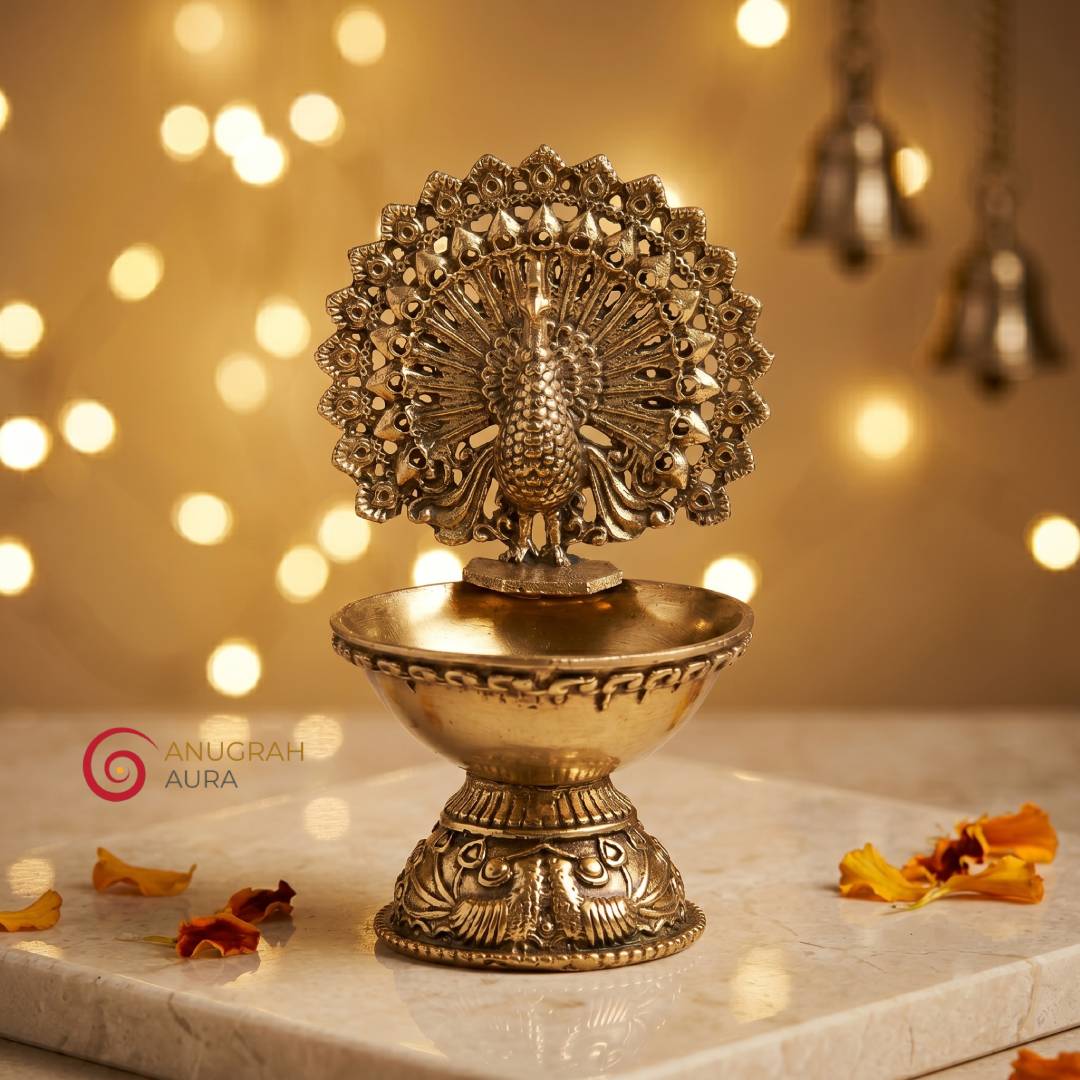
The peacock is Lord Murugan’s vahana and an important symbol in the Soorasamharam story. A Brass Peacock Lamp brings that motif into the pooja space. You do not need both this and the Vel OM Vilakku, so choose the lamp that best suits your altar.
What Should You Eat During Sashti Viratham?
Food practices vary considerably. Some devotees observe a one-meal vegetarian fast, while others take simple vegetarian meals or a fruit-and-milk diet. Certain households avoid onion and garlic during the six days, and others follow restrictions specific to their family or temple. There is no single food list that every Murugan devotee follows.
Whatever method you choose, adequate hydration and nutrition remain important, and prolonged fasting can be risky for people with certain medical conditions. Food deprivation is not a measure of spiritual merit.
For how to break the fast after Soorasamharam, see the guidance under completing the viratham below.
Sashti Viratham for Working People and Families
Keeping a six-day viratham does not require taking leave from work or withdrawing from ordinary responsibilities. A simple routine can be fitted around your household schedule.
| Time | Suggested devotional practice |
|---|---|
| Morning | Light the lamp and offer a short Murugan prayer |
| Before work | Chant Om Saravanabhava |
| During the day | Follow your chosen dietary practice and keep mindful conduct |
| Evening | Offer flowers and recite a Murugan hymn |
| Quiet time | Write Om Saravanabhava or read Vel Maaral |
| Before sleep | Reflect on the day and offer gratitude |
Parents can include children in simple activities such as offering flowers, listening to a Murugan story or chanting a short mantra. Children should not be pressured into restrictive fasting. Elderly devotees and those with health concerns may choose prayer and devotional reading instead of dietary austerities. The observance stays meaningful even when the daily routine is brief.
Sashti Viratham Benefits: What Are Sashti Viratham Palangal?
The Tamil expression Sashti Viratham Palangal (சஷ்டி விரதம் பலன்கள்) refers to the benefits or fruits associated with the observance. In Tamil devotional tradition, devotees undertake the viratham seeking Lord Murugan’s grace for wellbeing, courage, family harmony, marriage, children and spiritual progress. These are matters of faith and devotional intention. The observance can also bring practical gains in personal growth:
- Spiritual discipline. A daily prayer routine encourages consistency, as the devotee makes a deliberate commitment and keeps returning to it.
- Patience and self-control. The viratham invites reflection on speech, habits and behaviour, so that you respond thoughtfully instead of impulsively.
- Devotional concentration. Chanting, reading and Likhita Japa give the mind a recurring focus.
- Family devotion. Kanda Sashti is a chance for families to pray together and pass traditions to younger generations.
- Courage and hope. Murugan’s stories encourage devotees, and the Vel is revered as a symbol of wisdom and courage in overcoming difficulty.
Some devotees keep the vow while praying for marriage or children. This may bring personal spiritual comfort, but it should not replace medical care or be presented as a guarantee of marriage, conception or childbirth.
How to Complete Kanda Sashti Viratham
The six-day observance culminates in Soorasamharam. Many devotees conclude their fast after the prayers or ceremonies on the sixth day, while others continue through Thirukalyanam the following day. The right choice depends on your household tradition and the vow you undertook.
A simple conclusion may include lighting the lamp, offering flowers, chanting Murugan’s names and expressing gratitude, followed by suitable naivedyam shared according to family custom. If you have followed a restrictive dietary fast, resume eating gently and seek medical advice if you notice concerning symptoms.
The end of the viratham is also a moment to reflect on whether the six days have brought more patience, kindness, concentration or spiritual awareness. These qualities can continue beyond the festival.
Removing the Kaapu
After Soorasamharam and your concluding pooja, gently untie the Kaapu and offer a prayer of gratitude to Lord Murugan. You may place the thread respectfully under a plant, immerse it in flowing water or bury it in clean soil. If your family follows the seventh-day Thirukalyanam tradition, remove the Kaapu after that pooja instead.
Breaking the Fast with Vazhaithandu
After the Soorasamharam prayers, many devotees break the fast with fresh banana stem (Vazhaithandu) juice mixed with curd, or with tender coconut water. A light salad is another option: finely chopped banana stem with pomegranate, apple, cucumber, soaked moong dal and lemon juice.
Some families resume regular meals only on the seventh day, after Thirukalyanam. Because the stomach has been on a light diet, choose simple, easily digestible Vazhaithandu dishes without onion, garlic, excess oil or strong spices.
Frequently Asked Questions About Sashti Viratham
1. What is Sashti Viratham?
Sashti Viratham is a devotional vow dedicated to Lord Murugan, involving prayer, discipline and, in many traditions, fasting.
2. How many days is Kanda Sashti Viratham observed?
The annual observance traditionally lasts six days and culminates in Soorasamharam. Some devotees continue through Thirukalyanam.
3. When does Kanda Sashti Viratham begin in 2026?
It begins on Tuesday, November 10, 2026, and culminates on Sunday, November 15.
4. How do I observe Sashti Viratham for the first time?
Begin with a suitable dietary practice, establish morning and evening prayers and follow your household tradition. Avoid severe fasting without medical guidance.
5. Can I observe Sashti Viratham for one day?
Yes. A single-day observance can be meaningful, as many devotees do with the monthly Sashti, although it differs from the traditional six-day annual vow.
6. Can working people observe Kanda Sashti Viratham?
Yes. A short daily prayer routine can be combined with ordinary work and family responsibilities.
7. What mantra should I chant during Sashti Viratham?
Om Saravanabhava is a commonly used Murugan invocation. Devotees also recite Kanda Sashti Kavacham, Thiruppugazh and other familiar hymns.
8. What is Likhita Japa?
Likhita Japa is the devotional practice of repeatedly writing a sacred mantra or divine name while maintaining attention and remembrance.
9. What are the benefits of writing Om Saravanabhava?
Traditional teaching associates mantra writing with concentration, discipline and spiritual remembrance, and it gives a structured period of quiet prayer.
10. Why write Om Saravanabhava 108 times?
The number 108 has longstanding significance in Hindu japa traditions. It is a common devotional choice rather than a Kanda Sashti rule.
11. Can I write Om Saravanabhava in Tamil?
Yes. The mantra may be written in Tamil or another familiar script, provided it is written respectfully and accurately.
12. Is Likhita Japa compulsory during Sashti Viratham?
No. It complements chanting, reading and other forms of Murugan worship.
13. Can I recite Vel Maaral during Kanda Sashti?
Yes. Devotees may include Vel Maaral in their daily prayers according to personal or household tradition.
14. Is fasting compulsory for Sashti Viratham?
Dietary fasting is customary, but methods vary. Those unable to fast safely may focus on prayer, restraint and other devotional activities.
15. Can women observe Sashti Viratham during menstruation?
Household and temple customs vary. Menstruation is a normal biological process, and there is no medical reason to avoid private prayer, chanting or mantra writing solely because of it. Individuals may decide how to approach particular ritual customs.
16. Is Sashti Viratham observed for marriage?
Some devotees observe the vow while praying for marriage or family harmony. These are expressions of faith, not guarantees of a particular outcome.
17. Can Sashti Viratham be observed every month?
Yes. Many Murugan devotees observe the monthly Sashti in addition to the annual six-day Kanda Sashti.
18. When should Sashti Viratham be completed?
Some traditions conclude after Soorasamharam, while others continue through Thirukalyanam. Follow the practice associated with your vow.
19. What is the Kaapu in Kanda Sashti Viratham?
The Kaapu is a clean yellow cotton thread placed before Lord Murugan on the first day and worn on the wrist through the six days. Which wrist, and when to remove it, depends on your family and temple custom.
20. How do I break the fast after Soorasamharam?
Many devotees take fresh banana stem (Vazhaithandu) juice with curd or tender coconut water, then simple, easily digestible food without onion, garlic, excess oil or strong spices.
Kanda Sashti Viratham: Six Days of Prayer, Discipline and Devotion
Sashti Viratham is a chance to give six days to Lord Murugan through prayer, reflection and self-discipline. Its meaning does not depend on how little food a devotee eats or how elaborate the pooja arrangement is. A simple lamp, a heartfelt prayer and a sincere effort to cultivate patience can form the foundation of a meaningful observance.
Chanting or writing Om Saravanabhava 108 times gives the days a quiet centre, and pairing Likhita Japa with hymns such as Vel Maaral adds another way to deepen the experience. Whether you worship before a Murugan picture, a Brass Murugan Idol or a standing Vel, the purpose is the same: to approach Lord Murugan with faith, humility and an open heart.
For your altar this Kanda Sashti, explore the Sashti Pooja Companion, Brass Murugan Vel, Vel OM Vilakku, Brass Peacock Lamp, Brass Murugan Idols and more Pooja items at Anugrah Aura.
Vel Vel Muruga! Vetri Vel Muruga!
Related Reading
- Kanda Sashti 2026: Dates, Six-Day Viratham and Festival Significance
- Soorasamharam 2026: Complete Story and Tiruchendur Celebrations
References
- Drik Panchang: Soorasamharam 2026 for the festival date and Chennai Shashti tithi.
- Tiruchendur: Kanda Sasti 2026 Dates for the six-day festival calendar.
- Tiruchendur: Kanda Sasti Viratam or Fasting for traditional fasting approaches and the meaning of viratham.
- The Divine Life Society: Japa Yoga for traditional teaching on mantra repetition and Likhita Japa.
- Sivananda Yoga Vedanta Centres: Likita Japa, A Practical Way of Meditation for the practice and traditional benefits of mantra writing.